Why Creative Constraints Lead to Better Ideas
Imagine being asked to write anything you want. No topic. No audience. No deadline. No word limit. No purpose. At first, the freedom feels exciting. Then something unexpected happens. Instead of generating ideas effortlessly, you find yourself staring at a blank page, unsure where to begin. The sheer number of possibilities becomes overwhelming.
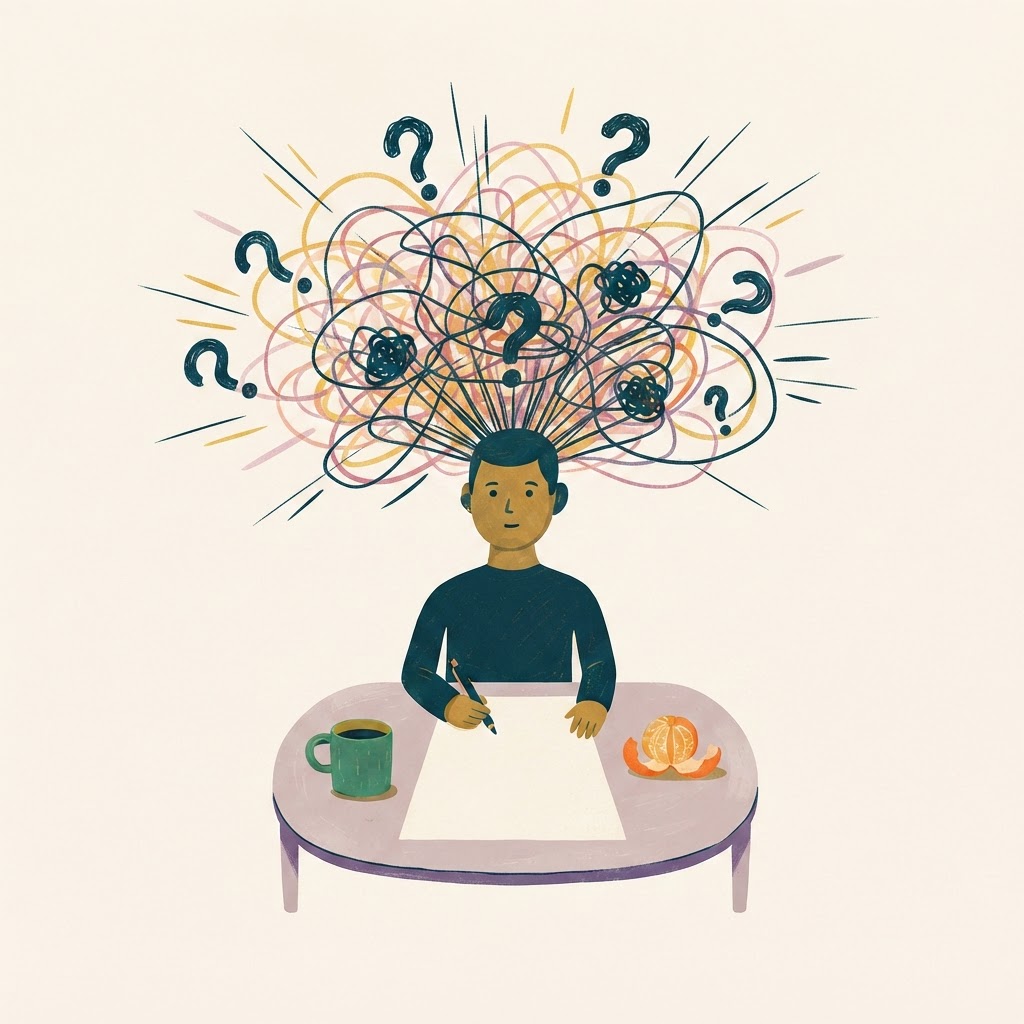
Unlimited freedom feels inspiring, but creativity often flourishes when we have boundaries to work within.
Imagine being asked to write anything you want. No topic. No audience. No deadline. No word limit. No purpose. At first, the freedom feels exciting. Then something unexpected happens. Instead of generating ideas effortlessly, you find yourself staring at a blank page, unsure where to begin. The sheer number of possibilities becomes overwhelming.
Now imagine a different challenge. Write a 500-word article that explains a complex idea to a twelve-year-old. Or create a marketing campaign using only photographs. Or solve a business problem without increasing the budget. Suddenly, ideas begin to emerge. The limitation provides direction. Instead of considering infinite possibilities, your mind starts exploring creative solutions within a defined space.
This is one of the great paradoxes of creativity. While we often associate innovation with complete freedom, research suggests that carefully designed constraints frequently produce more original ideas than unlimited choice.1 Boundaries focus attention, encourage experimentation, and force us to think beyond familiar solutions. In the age of AI, where generating endless ideas has become effortless, understanding the value of creative constraints has never been more important.
Why Unlimited Choice Can Reduce Creativity
Most people believe that more options lead to better decisions. To a point, they do. Beyond that point, however, excessive choice creates cognitive overload. Psychologists have shown that when people face too many possibilities, decision-making becomes slower, more difficult, and often less satisfying.2 Instead of exploring ideas deeply, we become distracted by the possibility that a better option might exist somewhere else. Creativity suffers in similar ways.
Without boundaries, every idea feels equally possible. Because there is no obvious starting point, our thinking often becomes scattered. We jump between possibilities without developing any of them fully.
Constraints solve this problem by narrowing the search space. Rather than asking, "What could I possibly create?", we begin asking, "What's the most interesting solution within these boundaries?" That subtle shift transforms creativity from an abstract exercise into a practical problem-solving process.
Constraints Encourage Better Problem-Solving
Many of history's greatest innovations emerged because people faced significant limitations. Engineers develop lighter aircraft because fuel is expensive. Architects design more efficient buildings because land is limited. Entrepreneurs create new business models because they lack the resources of larger competitors. Artists discover distinctive styles because they choose to work within particular materials or techniques. In each case, the constraint becomes a catalyst rather than an obstacle.
Research into creativity suggests that constraints encourage divergent thinking by forcing us to search for less obvious solutions.3 When familiar approaches become unavailable, we begin combining ideas in new ways. Instead of relying on habit, we explore alternatives that might otherwise have remained hidden. This explains why some of the most innovative work emerges during periods of scarcity rather than abundance. Limitations encourage ingenuity because they require us to think differently rather than simply think more.
The Blank Page Is More Difficult Than the Frame
Writers often fear the blank page. The problem is not a lack of ideas but a lack of direction. Imagine being asked to write an article about anything. Now imagine being asked to explain cognitive bias in 800 words using one everyday example and three research studies. The second task is significantly more constrained, yet many writers would find it easier to begin. The framework removes unnecessary decisions while leaving plenty of room for originality.
The same principle applies across creative disciplines. Photographers work within the boundaries of a single lens. Designers limit themselves to specific visual systems. Musicians compose within particular keys, rhythms, or instruments. Scientists work within the constraints imposed by evidence and experimentation. Rather than reducing creativity, these structures provide the stability needed for imagination to flourish.
Creativity Thrives Under Productive Limitations
Not all constraints improve creativity. Some restrictions become so severe that they prevent experimentation altogether. Others are so vague that they provide little guidance. The most productive constraints occupy the space between complete freedom and excessive control. Educational psychologists describe a similar idea in learning. We improve most effectively when tasks are challenging enough to require effort but not so difficult that progress becomes impossible.4 Creative work follows much the same principle.
A useful constraint stretches our thinking without limiting our ability to explore. Examples include:
- Explaining a complex idea without using technical language.
- Designing a product using recycled materials.
- Solving a customer problem without increasing costs.
- Creating a presentation using only images.
- Writing an article within a fixed word limit.
Each limitation removes one obvious solution while encouraging many less obvious ones.
AI Can Generate Ideas—Constraints Create Better Ones
Artificial intelligence can produce hundreds of ideas within seconds. This capability is extraordinary, but it introduces a new challenge. If AI can generate almost everything, how do we identify what is genuinely valuable? The answer often lies in constraints. Instead of asking AI:
"Give me 100 business ideas."
Try asking:
"Generate five business ideas that solve a real problem for small charities using existing technology, require less than £10,000 to launch, and can become profitable within two years."
The second prompt produces fewer ideas but often much better ones because the constraints encourage deeper reasoning rather than broader generation. The same principle applies to writing, product design, education, strategy, and innovation. AI performs best when it is solving an interesting problem rather than responding to unlimited possibility. Constraints improve not only human creativity but also the quality of our conversations with AI.
Designing Constraints for Better Thinking
Strong thinkers rarely wait for inspiration. Instead, they deliberately create conditions that encourage it. Writers establish daily word-count goals. Designers use grid systems. Researchers formulate clear hypotheses before collecting evidence. Product teams define customer needs before generating solutions. These constraints reduce unnecessary cognitive effort while directing attention towards the problem that matters most.
You can apply the same approach in your own work. Before beginning a project, define a few meaningful boundaries. What problem must this solve? Who is it for? What resources are available? What limitations cannot be changed? How will success be measured? These questions narrow your focus without reducing your creativity. In many cases, they make creative thinking considerably easier.
Creativity Is the Art of Solving Problems
We often imagine creativity as spontaneous inspiration. In reality, it is usually a process of solving meaningful problems within real-world constraints. The greatest artists, scientists, entrepreneurs, and innovators rarely succeeded because they enjoyed unlimited freedom. They succeeded because they learned to work creatively within the limitations they faced. Instead of seeing constraints as barriers, they treated them as invitations to think differently.
This mindset lies at the heart of cognitive fitness. Strong thinkers recognise that better ideas rarely emerge from endless brainstorming alone. They emerge from asking thoughtful questions, embracing productive limitations, and remaining curious enough to explore solutions that others overlook. Artificial intelligence makes generating ideas easier than ever before. That means the future advantage will not belong to those who produce the most ideas. It will belong to those who know how to shape those ideas with thoughtful constraints, transforming possibility into originality through better thinking.
Try This
Choose a creative project you're currently working on. Instead of asking AI for unlimited ideas, give it meaningful constraints. For example:
Help me generate five solutions to this problem. Each solution must cost less than £5,000, be achievable within three months, require no additional staff, and be simple enough to explain in two minutes. After presenting the ideas, explain how each constraint improved the quality of the solutions.
Then compare the results with a broad, unconstrained prompt. Notice which approach produces ideas that are more practical, more original, and easier to develop.
Key Takeaways
- Unlimited freedom often creates cognitive overload rather than greater creativity.
- Constraints narrow attention and encourage deeper, more original problem-solving.
- Many important innovations emerge because of limitations rather than despite them.
- AI produces better ideas when guided by thoughtful constraints instead of unlimited prompts.
- Cognitive fitness includes learning to design environments and challenges that stimulate creative thinking.
Continue the Conversation
The AI Thinking Partner Playbook introduces seven practical frameworks for using AI to strengthen—not replace—your thinking. The Perspective Expander, First-Principles Co-pilot, and Scenario Builder frameworks help you use AI to explore creative possibilities, embrace productive constraints, and develop stronger ideas through structured thinking. Download your free copy and begin building the cognitive fitness needed to create more original solutions in the age of AI.
References
-
Stokes, P.D. Creativity from Constraints: The Psychology of Breakthrough. New York: Springer Publishing (2005).
-
Iyengar, S.S. & Lepper, M.R. When choice is demotivating: Can one desire too much of a good thing? Journal of Personality and Social Psychology 79, 995–1006 (2000).
-
Rosso, B.D. Creativity and constraints: Exploring the role of constraints in the creative processes of research and development teams. Organization Studies 35, 551–585 (2014).
-
Bjork, R.A. & Bjork, E.L. Making things hard on yourself, but in a good way: Creating desirable difficulties to enhance learning. In: Gernsbacher, M.A., Pew, R.W., Hough, L.M. & Pomerantz, J.R. (eds.) Psychology and the Real World: Essays Illustrating Fundamental Contributions to Society. New York: Worth Publishers, pp. 56–64 (2011).
-
Sawyer, R.K. Explaining Creativity: The Science of Human Innovation. 2nd edn. Oxford: Oxford University Press (2012).
-
Amabile, T.M. Creativity in Context. Boulder, CO: Westview Press (1996).
-
Csikszentmihalyi, M. Creativity: Flow and the Psychology of Discovery and Invention. New York: HarperCollins (1996).
Enjoying this article?
Get more like it delivered to your inbox once a month.