What Comes After Productivity?
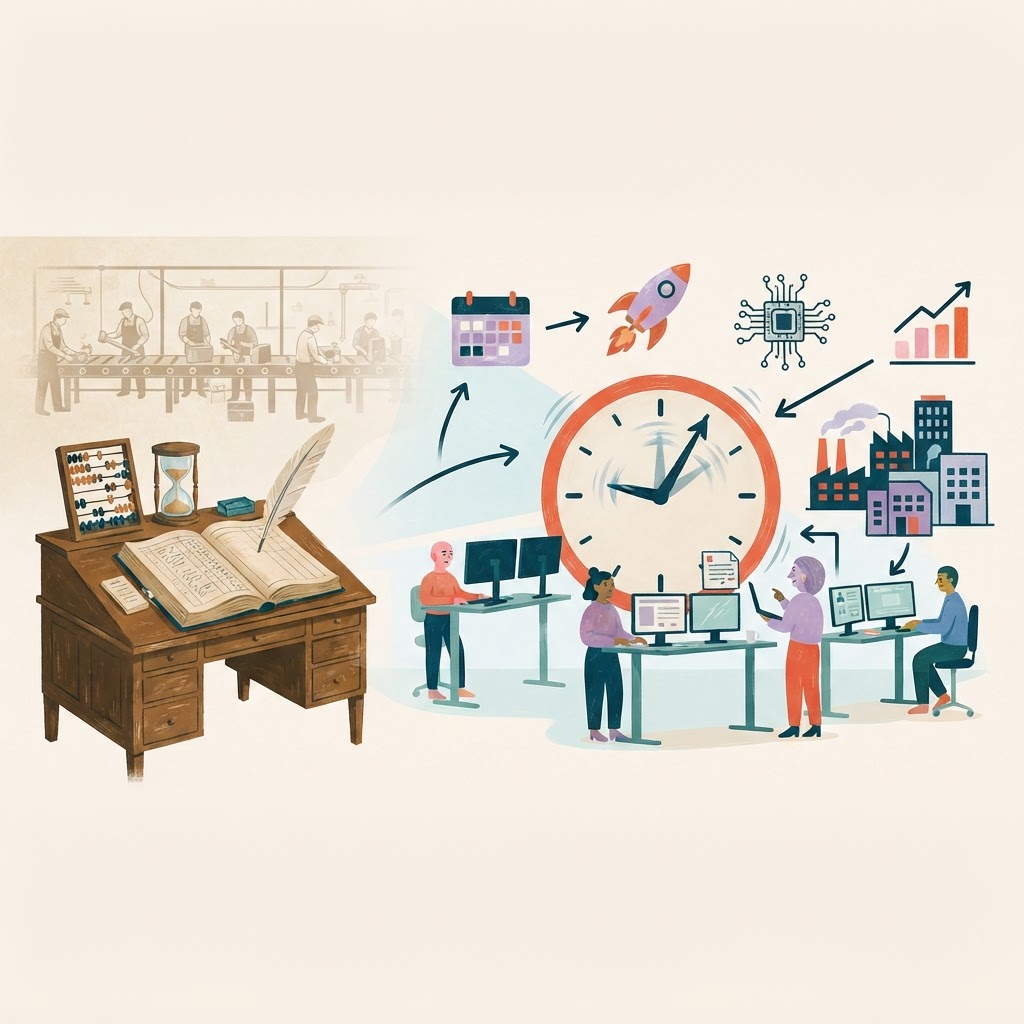
For decades, productivity has been one of the defining goals of modern work. We have searched constantly for better calendars, faster computers, improved workflows, and more efficient ways to complete our growing lists of tasks. Entire industries have emerged around helping us save minutes, automate routine work, and accomplish more each day.
As artificial intelligence makes work faster, the real opportunity is no longer doing more. It is thinking better about what deserves our time.
For decades, productivity has been one of the defining goals of modern work. We have searched constantly for better calendars, faster computers, improved workflows, and more efficient ways to complete our growing lists of tasks. Entire industries have emerged around helping us save minutes, automate routine work, and accomplish more each day.
Artificial intelligence represents the latest and perhaps most significant step in that pursuit. Tasks that once required hours can now be completed in minutes. Emails can be drafted automatically, reports summarised instantly, presentations outlined in seconds, and software code generated with remarkable speed. The promise is compelling: accomplish more while investing less effort.
Yet this raises an important question. If technology continues making us dramatically more productive, what should we do with the time, attention, and mental energy that it creates? Productivity has always been treated as the objective, but perhaps it is better understood as a means to something more valuable. The future of work may therefore be defined not by productivity itself, but by what comes after it.
Productivity Was Never the Final Goal
Productivity has always been valuable because it enables something else. Factories sought greater productivity to manufacture more goods with fewer resources. Businesses pursued efficiency to serve more customers and create greater value. Individuals adopted productivity systems because they hoped to reduce stress, create more freedom, or make progress on meaningful goals. The objective was never simply to complete more tasks. The objective was to improve the quality of work and, ultimately, the quality of life.
This distinction becomes increasingly important as AI automates more routine cognitive work. If we continue using every efficiency gain simply to complete additional tasks, we risk filling the space created by automation with even more activity. Our calendars become fuller, our inboxes remain crowded, and our attention becomes increasingly fragmented despite having more powerful tools than ever before. Technology creates an opportunity to reconsider not only how efficiently we work but also what work deserves our attention in the first place.
Efficiency Creates Space for Better Thinking
Throughout history, technological progress has repeatedly reduced the effort required for routine tasks while increasing the value of higher-level thinking. Calculators freed scientists from lengthy arithmetic, allowing them to focus on mathematical reasoning. Computer-aided design accelerated technical drawing, allowing engineers to spend more time solving design problems. Search engines dramatically reduced the time required to locate information, shifting greater emphasis towards interpreting and applying knowledge.
Artificial intelligence continues this pattern. As drafting, summarising, searching, organising, and analysing become faster, activities such as strategic thinking, judgment, creativity, and learning become proportionally more valuable because they are no longer constrained by routine administrative work. This does not mean routine work disappears entirely. Rather, its relative importance changes. As technology reduces the effort required for execution, deciding what deserves to be executed becomes the more significant challenge.
The Scarce Resource Is No Longer Time Alone
People often describe time as our most valuable resource. In reality, attention may now be even more important. Artificial intelligence can save hours by automating repetitive work, but it cannot decide where our attention should be directed. Every notification, meeting, email, and request competes for a limited cognitive resource that no technology can expand indefinitely. While AI can increase the quantity of work we complete, it cannot determine whether that work contributes meaningfully to our goals.
Psychologist Herbert Simon recognised this challenge decades ago when he observed that an abundance of information creates a scarcity of attention.1 That insight has become even more relevant in the age of AI. As generating information becomes increasingly effortless, selecting what deserves our attention becomes increasingly difficult. The competitive advantage therefore shifts from managing time efficiently to investing attention wisely.
From Output to Insight
Many workplaces still evaluate success by measuring visible output. Reports completed, emails answered, meetings attended, and projects delivered all provide tangible evidence that work is being done. Artificial intelligence complicates this picture because it dramatically increases our ability to generate output. If AI can produce reports, presentations, and proposals in minutes, producing more documents is no longer a meaningful measure of value.
Instead, organisations will increasingly benefit from people who generate insight rather than simply output. Insight involves recognising patterns, asking better questions, identifying emerging opportunities, and understanding problems that others have overlooked. These capabilities depend less on speed and more on curiosity, judgment, and the ability to synthesise ideas across disciplines. As routine production becomes easier, original thinking becomes more valuable.
The New Measure of Expertise
For many years, expertise was closely associated with possessing specialised knowledge and executing complex tasks efficiently. Those qualities remain important, but AI changes how expertise is expressed.
Experts increasingly distinguish themselves through the quality of their questions, their judgment under uncertainty, and their ability to integrate knowledge from multiple sources. They recognise weak evidence, challenge assumptions, anticipate unintended consequences, and communicate complex ideas clearly. These are capabilities that emerge through experience, reflection, and deep understanding rather than rapid information retrieval.
Research into expertise consistently shows that outstanding performers develop sophisticated mental models that help them interpret unfamiliar situations and make sound decisions under uncertainty.2 Artificial intelligence can support these processes by providing information and generating alternatives, but building those mental models remains a fundamentally human endeavour. The future of expertise therefore lies less in knowing everything and more in thinking exceptionally well.
AI Should Create Capacity, Not Dependency
The greatest risk associated with powerful productivity tools is not that they make us less busy. It is that they gradually encourage us to disengage from the thinking that gives work its meaning. If every email is drafted automatically, every meeting summarised instantly, every decision delegated to recommendations, and every problem solved by asking AI for an answer, we may become increasingly efficient while exercising our own judgment less frequently. Over time, that pattern risks creating cognitive dependence rather than cognitive growth.
A more valuable approach is to use AI to create capacity for higher-quality thinking. The time saved through automation can be invested in reflection, learning, strategic planning, experimentation, mentoring, and creative exploration. Instead of filling every efficiency gain with additional tasks, we can use those gains to strengthen the capabilities that technology cannot develop on our behalf. The question is therefore not simply whether AI saves time. It is how we choose to use the time that it saves.
A New Definition of Productivity
Perhaps productivity itself deserves a broader definition. Rather than measuring productivity by the number of tasks completed, we might evaluate it by the quality of our decisions, the originality of our ideas, the strength of our relationships, or the depth of our learning. These outcomes are more difficult to quantify than completed checklists, yet they often create far greater long-term value for individuals and organisations alike.
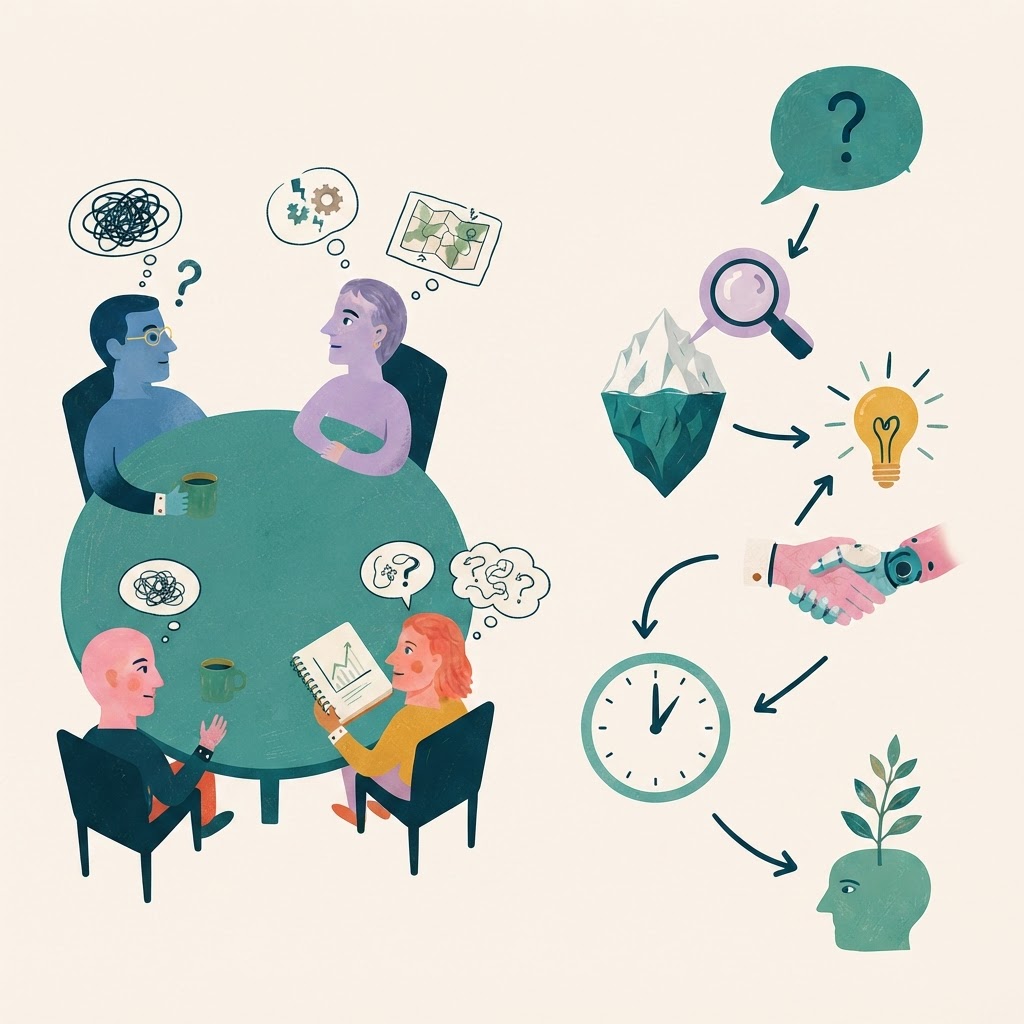
This perspective encourages a shift from activity to intentionality. Instead of asking, "How can I accomplish more?", we begin asking, "What deserves my attention?", "What creates the greatest value?", and "What kind of thinking will matter most over the next decade?" Those questions become increasingly important as AI continues reducing the cost of routine work.
Cognitive Fitness Is What Comes After Productivity
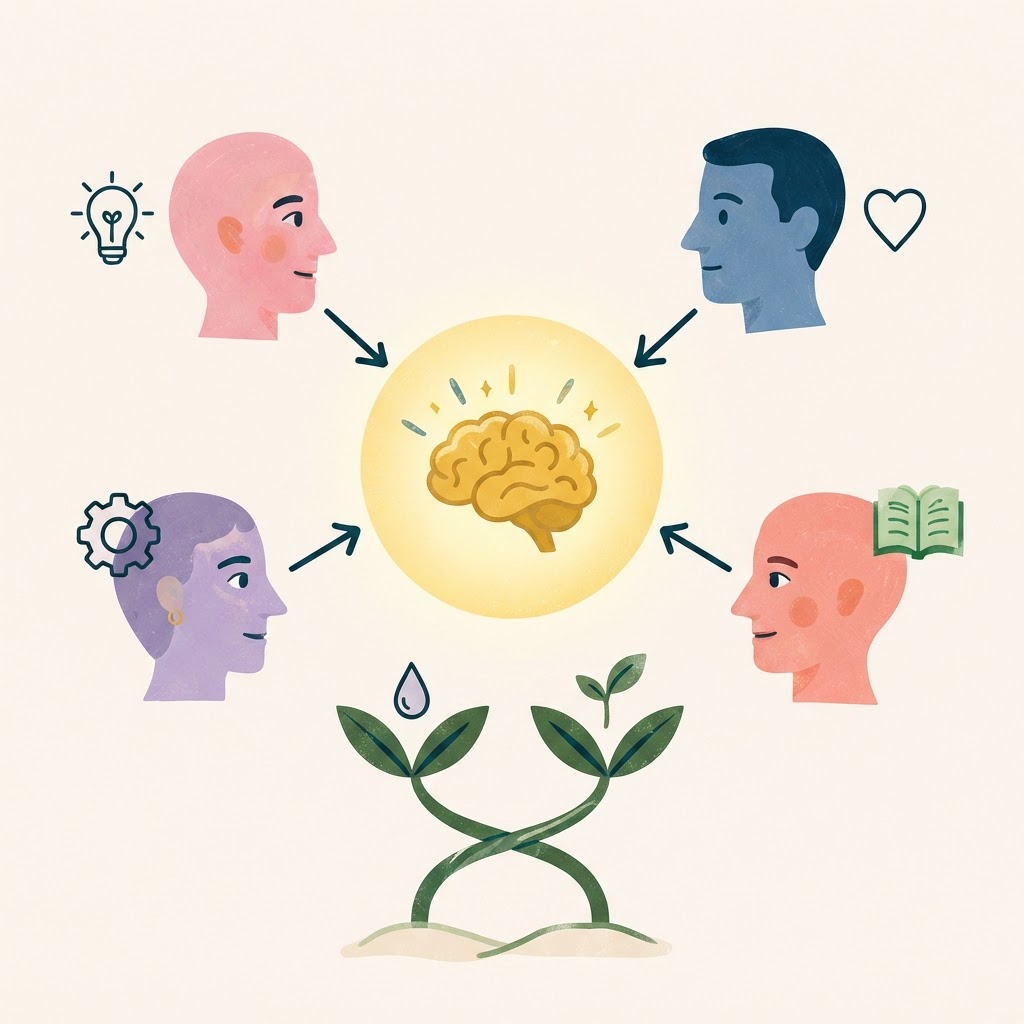
Artificial intelligence is changing the economics of work. Routine cognitive tasks are becoming faster, cheaper, and more accessible. As a result, the uniquely human capabilities that remain difficult to automate become increasingly valuable. Critical thinking, judgment, creativity, ethical reasoning, curiosity, and lifelong learning are no longer optional qualities that complement productivity. They are becoming the foundation upon which future productivity depends. This idea sits at the heart of cognitive fitness.
Just as physical fitness prepares the body for changing physical demands, cognitive fitness prepares the mind for an increasingly intelligent world. It is the ongoing practice of strengthening attention, reasoning, reflection, adaptability, and sound judgment so that technology expands rather than replaces our capabilities.
The future of work is unlikely to belong to the people who complete the greatest number of tasks. Increasingly, it will belong to those who ask better questions, make wiser decisions, develop deeper understanding, and use intelligent tools to amplify distinctly human strengths. Productivity remains important, but it is no longer the destination. It is the foundation that creates space for something even more valuable: better thinking.
Try This
The next time AI helps you complete a task more quickly, resist the temptation to immediately move on to the next item on your list. Instead, ask yourself:
- What important question do I now have time to explore?
- What decision deserves deeper thinking?
- What could I learn that would create long-term value?
- How could I use this time to strengthen my judgment rather than simply increase my output?
Then ask AI:
I've saved time by automating this task. Help me identify three higher-value activities that would strengthen my thinking, improve my decisions, or create greater long-term impact than simply completing another routine task.
Key Takeaways
- Productivity is valuable because it creates opportunities for more meaningful work, not because activity is an end in itself.
- As AI automates routine tasks, attention, judgment, creativity, and insight become increasingly valuable.
- Expertise is shifting from producing information to interpreting, evaluating, and applying it wisely.
- AI should create capacity for better thinking rather than encouraging dependence on automated answers.
- Cognitive fitness helps transform productivity gains into stronger judgment, deeper learning, and more meaningful work.
Continue the Conversation
The AI Thinking Partner Playbook introduces seven practical frameworks for using AI to strengthen—not replace—your thinking. The Cognitive Coach, First-Principles Co-pilot, Scenario Builder, and Socratic Guide frameworks help you use AI to create space for deeper reflection, stronger judgment, and better decisions. Download your free copy and begin building the cognitive fitness needed to thrive in a future where thinking—not simply productivity—creates the greatest value.
References
-
Simon, H.A. Designing organizations for an information-rich world. In Computers, Communications, and the Public Interest (eds Greenberger, M.) 37–72 (Johns Hopkins University Press, 1971).
-
Ericsson, K.A., Charness, N., Feltovich, P.J. & Hoffman, R.R. (eds.) The Cambridge Handbook of Expertise and Expert Performance. Cambridge: Cambridge University Press (2006).
-
Autor, D.H. Why are there still so many jobs? The history and future of workplace automation. Journal of Economic Perspectives 29, 3–30 (2015).
-
Mollick, E. Co-Intelligence: Living and Working with AI. London: Virgin Books (2024).
-
Newport, C. Slow Productivity: The Lost Art of Accomplishment Without Burnout. New York: Portfolio (2024).
-
Brynjolfsson, E. & McAfee, A. The Second Machine Age: Work, Progress, and Prosperity in a Time of Brilliant Technologies. New York: W.W. Norton & Company (2014).
-
Kahneman, D. Thinking, Fast and Slow. London: Penguin Books (2011).
Enjoying this article?
Get more like it delivered to your inbox once a month.