Human Capability in the Age of AI
Every major technological shift has raised the same question: What will humans contribute once machines become better at the tasks we perform today?
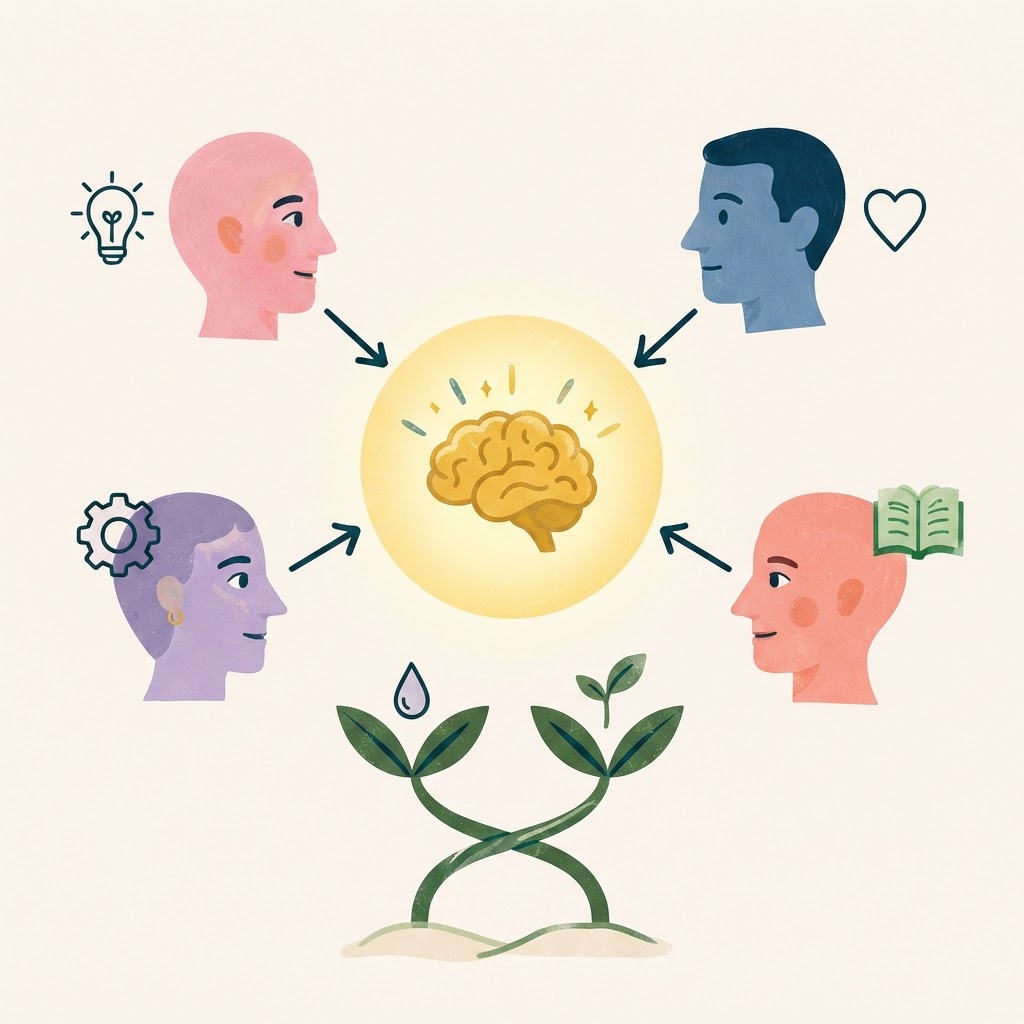
As artificial intelligence becomes more capable, the most valuable human skills are not disappearing—they are becoming more important.
Every major technological shift has raised the same question: What will humans contribute once machines become better at the tasks we perform today?
The Industrial Revolution transformed physical labour. Computers automated calculations that once required teams of specialists. The internet placed vast libraries of knowledge into every pocket. Now, artificial intelligence is beginning to perform tasks that many believed required uniquely human intelligence, from writing reports and analysing data to generating code, creating images, and summarising complex research.
It is understandable that these developments provoke both excitement and concern. If AI can produce high-quality work in seconds, it is natural to wonder whether human expertise will gradually become less valuable. Yet history suggests a more nuanced pattern. Technologies rarely eliminate the need for human capability altogether. Instead, they change which capabilities matter most.
The question is therefore not whether humans will remain relevant. The more important question is what kinds of thinking, judgment, and creativity will become increasingly valuable in a world where intelligent tools are widely available.
Technology Changes Work, Not Human Potential
Throughout history, new technologies have consistently automated routine tasks while increasing the value of capabilities that machines struggle to replicate. The calculator did not make mathematical understanding obsolete. Instead, it shifted education away from lengthy manual calculations and towards interpreting results, solving problems, and applying mathematical reasoning. Search engines did not eliminate the need to learn. They changed the importance of remembering facts relative to evaluating information and synthesising knowledge.
Artificial intelligence represents another step in this long pattern. It reduces the effort required to produce first drafts, retrieve information, and automate repetitive cognitive work. At the same time, it increases the importance of capabilities that involve judgment, critical thinking, ethical reasoning, creativity, collaboration, and learning across disciplines.
Research on the economics of technological change consistently shows that technology tends to complement human capability rather than simply replace it.1 People who learn to work effectively alongside new tools often become significantly more productive, while those who rely on old ways of working may struggle to adapt. The competitive advantage comes not from resisting technology but from developing the distinctly human capabilities that technology amplifies.
Knowledge Is Becoming a Starting Point
For much of modern education, success depended heavily on acquiring knowledge because information was relatively difficult to access. Expertise often reflected years spent mastering facts, procedures, and technical information that others could not easily obtain. Today, AI systems can retrieve and explain vast amounts of information within seconds. This changes the role of knowledge. Facts remain important because they provide the foundation for reasoning, but possessing information alone is becoming less distinctive when intelligent systems can access the same material almost instantly.
The greater advantage increasingly comes from knowing what to do with knowledge. Understanding how to evaluate evidence, connect ideas from different disciplines, recognise patterns, ask insightful questions, and apply judgment to unfamiliar situations cannot simply be outsourced to technology. These capabilities depend upon experience, reflection, and deep conceptual understanding. Knowledge therefore remains essential, but it is becoming the beginning of effective thinking rather than its destination.
Judgment Cannot Be Automated Completely
Artificial intelligence can generate recommendations, compare alternatives, and identify patterns across enormous datasets. What it cannot do is assume responsibility for the decisions that ultimately shape organisations, communities, and individual lives.
Every important decision involves context that extends beyond available data. Leaders balance competing priorities. Doctors consider the circumstances of individual patients. Teachers adapt to the needs of different learners. Designers weigh functionality alongside aesthetics, accessibility, and cultural expectations. These decisions require judgment because they involve values, trade-offs, uncertainty, and human consequences that cannot be reduced to optimisation alone.
Judgment also depends on recognising when existing information is incomplete or when the assumptions behind a recommendation deserve closer examination. AI can support these conversations by presenting evidence, identifying alternatives, or highlighting risks, but deciding which course of action best reflects human goals remains a fundamentally human responsibility. As AI becomes more capable, judgment is likely to become one of the defining professional skills of the future.
Creativity Is Expanding, Not Disappearing
One of the most surprising developments in recent years has been AI's ability to generate text, images, music, and software that often appears highly creative. This has led some observers to question whether human creativity itself is becoming less valuable.
Creativity, however, involves much more than producing content. Psychologists increasingly describe creativity as the ability to generate ideas that are both novel and useful within a particular context.2 That process depends upon curiosity, lived experience, cultural understanding, emotional insight, and the ability to recognise which ideas deserve further development. AI can generate thousands of possibilities, but deciding which possibilities are meaningful still depends on human judgment.
In practice, AI often expands creative capacity rather than replacing it. Writers can explore alternative structures more quickly. Designers can prototype concepts in minutes instead of days. Researchers can generate new hypotheses for investigation. Rather than eliminating creativity, AI shifts more attention towards selecting, refining, combining, and evaluating ideas. The future of creativity is therefore likely to be increasingly collaborative, with humans directing the creative process while AI accelerates exploration.
Learning Is Becoming a Lifelong Advantage
Rapid technological change means that knowledge and technical skills become outdated more quickly than they once did. Many of today's emerging professions did not exist a decade ago, while many current workflows will continue evolving as AI becomes more capable. This makes learning itself one of the most valuable capabilities anyone can develop.
People who learn efficiently can adapt to changing technologies, acquire new expertise, and remain effective even as industries transform. Research on expertise consistently shows that exceptional performers are distinguished not simply by what they know but by how effectively they continue learning throughout their careers.3
Artificial intelligence can become a powerful learning partner by explaining unfamiliar concepts, generating personalised practice, providing immediate feedback, and encouraging reflection. Used thoughtfully, it has the potential to accelerate learning rather than replace it. The organisations and individuals that thrive in the coming decades are therefore likely to be those who treat continuous learning as a permanent habit rather than an occasional necessity.
Collaboration Will Become More Important
The popular image of AI often focuses on individuals working alone with increasingly powerful software. In reality, many of the most significant opportunities will emerge through collaboration between people who bring different expertise, experiences, and perspectives.
Complex challenges rarely belong entirely to one discipline. Developing responsible AI systems requires computer scientists, psychologists, ethicists, designers, educators, lawyers, and policymakers to work together. Solving problems such as climate change, healthcare, education, and economic development similarly depends upon integrating diverse forms of knowledge.
Artificial intelligence can improve these collaborations by reducing routine work, translating specialised information, and helping teams explore ideas more efficiently. It cannot replace the human relationships, communication, empathy, and trust that enable collaborative thinking in the first place. As technical barriers become lower, the ability to work effectively with other people may become an even greater source of competitive advantage.
Cognitive Fitness Is a Human Advantage
Many discussions about AI focus on what the technology can do. An equally important question is what humans should continue developing. The answer is not memorising more facts than AI can retrieve or attempting to outperform machines at tasks they increasingly automate. Instead, it involves strengthening the capabilities that allow us to use these technologies wisely: critical thinking, curiosity, judgment, ethical reasoning, creativity, adaptability, communication, and lifelong learning. This is the foundation of cognitive fitness.
Just as physical fitness prepares the body to meet changing physical demands, cognitive fitness prepares the mind to navigate an increasingly intelligent world. It involves developing habits of reflection, questioning assumptions, evaluating evidence, making thoughtful decisions, and learning continuously. These capabilities become more valuable—not less—as AI grows more capable because they determine how effectively we guide, evaluate, and apply the outputs that intelligent systems generate.
Artificial intelligence represents one of the most significant technological advances in modern history. Like every transformative technology before it, its greatest impact will not come from replacing human capability but from reshaping it. The future will belong to people who learn to combine human judgment with artificial intelligence, using each for what it does best while continuing to invest in the capabilities that make thoughtful, creative, and responsible decision-making uniquely human.
Try This
Choose one task you regularly perform with AI. Instead of asking AI to complete the task for you, ask:
Help me strengthen my thinking while working on this task. Challenge my assumptions, explain your reasoning, identify alternative approaches, point out weaknesses in my ideas, and ask questions that improve my judgment rather than simply producing an answer.
Notice how the conversation changes when AI becomes a thinking partner instead of an answer generator.
Key Takeaways
- Technological change shifts the value of human capabilities rather than eliminating them.
- Knowledge remains important, but judgment, creativity, and critical thinking are becoming even more valuable.
- AI complements human expertise most effectively when it supports learning and decision-making instead of replacing them.
- Lifelong learning and interdisciplinary collaboration will become increasingly important in an AI-enabled world.
- Cognitive fitness helps people develop the capabilities that remain uniquely valuable as technology continues to advance.
Continue the Conversation
The AI Thinking Partner Playbook introduces seven practical frameworks for using AI to strengthen—not replace—your thinking. The Challenger, Socratic Guide, Perspective Expander, and Cognitive Coach frameworks help you develop better judgment, deepen your reasoning, and build the cognitive fitness needed to thrive alongside increasingly capable AI. Download your free copy and begin investing in the human capabilities that will matter most in the years ahead.
References
-
Autor, D.H. Why are there still so many jobs? The history and future of workplace automation. Journal of Economic Perspectives 29, 3–30 (2015).
-
Sawyer, R.K. Explaining Creativity: The Science of Human Innovation. 2nd edn. Oxford: Oxford University Press (2012).
-
Ericsson, K.A., Charness, N., Feltovich, P.J. & Hoffman, R.R. (eds.) The Cambridge Handbook of Expertise and Expert Performance. Cambridge: Cambridge University Press (2006).
-
Mollick, E. Co-Intelligence: Living and Working with AI. London: Virgin Books (2024).
-
Amershi, S. et al. Guidelines for human-AI interaction. In Proceedings of the 2019 CHI Conference on Human Factors in Computing Systems, 1–13 (ACM, 2019).
-
Brynjolfsson, E. & McAfee, A. The Second Machine Age: Work, Progress, and Prosperity in a Time of Brilliant Technologies. New York: W.W. Norton & Company (2014).
-
National Academies of Sciences, Engineering, and Medicine. Human-AI Teaming: State-of-the-Art and Research Needs. Washington, DC: National Academies Press (2022).
Enjoying this article?
Get more like it delivered to your inbox once a month.