Cognitive Fitness Explained
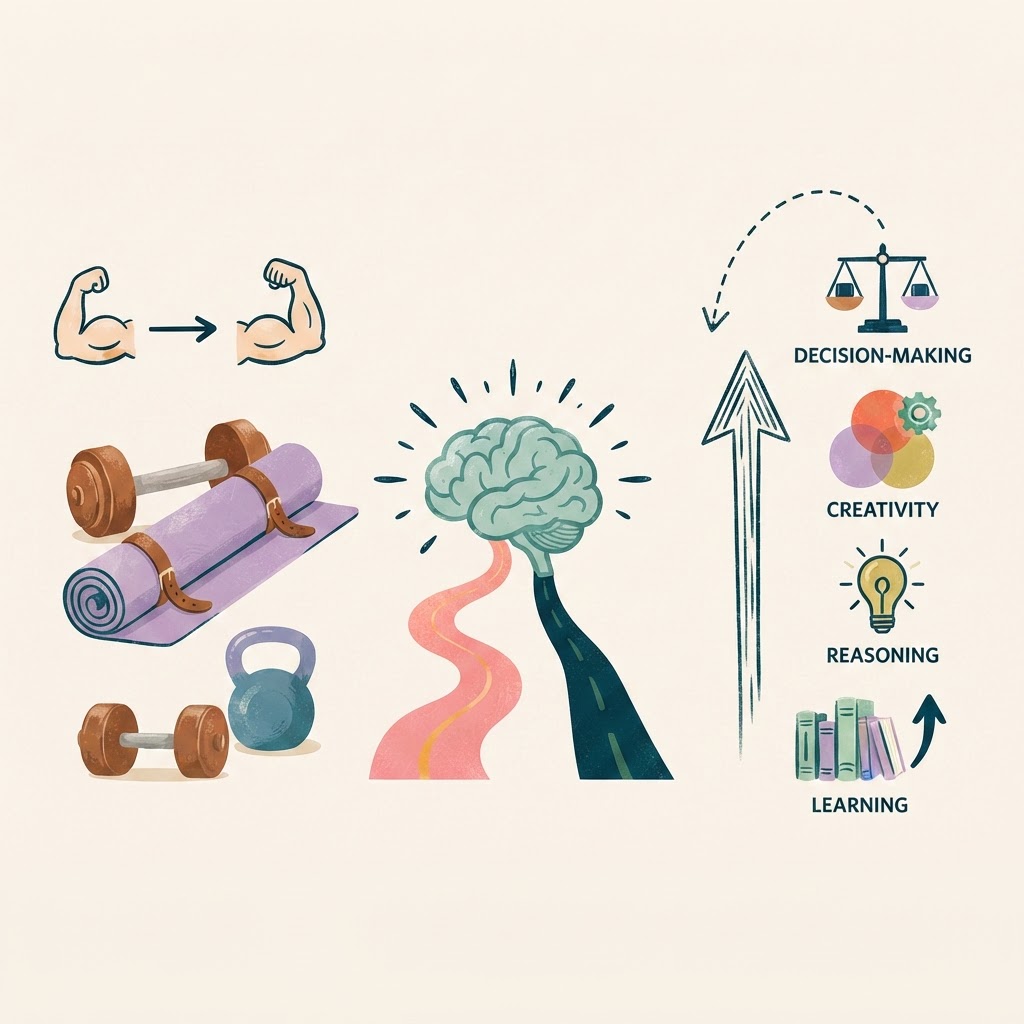
Physical fitness is easy to recognize. We understand that strength, endurance, and flexibility improve through consistent practice rather than a single workout. Most people also recognize that these abilities diminish if they are not used. Although the brain operates differently from a muscle, many of the mental abilities that support learning, reasoning, creativity, and decision-making follow a similar principle: they improve with deliberate use.
Why strengthening your mind may be one of the most valuable investments you can make in the age of AI.
Physical fitness is easy to recognize. We understand that strength, endurance, and flexibility improve through consistent practice rather than a single workout. Most people also recognize that these abilities diminish if they are not used. Although the brain operates differently from a muscle, many of the mental abilities that support learning, reasoning, creativity, and decision-making follow a similar principle: they improve with deliberate use.
This is the idea behind cognitive fitness.
Cognitive fitness refers to the ongoing practice of strengthening the mental capabilities that allow us to understand complex ideas, solve problems, make sound decisions, communicate clearly, and adapt to new situations. Rather than focusing on how much information we know, cognitive fitness emphasizes how effectively we think.
In an era where artificial intelligence can generate answers almost instantly, developing cognitive fitness is becoming increasingly important. Technology can augment many aspects of thinking, but it cannot replace the uniquely human responsibility of exercising judgment, curiosity, wisdom, and ethical reasoning.
More Than Intelligence
Many people equate cognitive ability with intelligence or IQ. While intelligence certainly influences learning and performance, decades of research suggest that expertise and effective thinking are shaped by far more than innate ability.1 Motivation, practice, reflection, metacognition, and learning strategies all contribute to how well people think over time.
Consider two professionals with similar educational backgrounds. One routinely questions assumptions, reflects on decisions, seeks feedback, and actively learns from mistakes. The other relies on familiar routines and rarely examines their own thinking. Over several years, the difference between them can become substantial—not because one was born smarter, but because one consistently invested in developing better thinking habits.
This perspective is encouraging because it shifts the focus from fixed ability to continuous improvement. Cognitive fitness is not reserved for academics or experts. It is something anyone can strengthen through intentional practice.
The Building Blocks of Cognitive Fitness
Just as physical fitness includes strength, endurance, balance, and mobility, cognitive fitness is supported by several interconnected capabilities.
Attention allows us to focus on what matters despite constant distractions. Without sustained attention, deeper learning becomes difficult because information never receives sufficient mental processing.2
Memory enables us to retain and retrieve knowledge when we need it. Contrary to popular belief, memory is not simply a storage system. The act of retrieving information actually strengthens learning and improves future recall.3
Reasoning helps us evaluate evidence, identify assumptions, recognize patterns, and solve problems. Good reasoning involves more than arriving at correct answers; it requires understanding why those answers are justified.
Metacognition refers to thinking about our own thinking. It includes recognizing what we know, identifying gaps in our understanding, monitoring our progress, and adjusting our strategies when necessary. Researchers consistently identify metacognition as one of the defining characteristics of effective learners.4
Creativity enables us to connect ideas, imagine alternatives, and develop novel solutions. Although creativity is often portrayed as a mysterious talent, research suggests it emerges from combining existing knowledge in new ways and exploring multiple possibilities rather than settling on the first idea that comes to mind.5
Together, these capabilities create a flexible and adaptable mind that continues learning throughout life.
Cognitive Fitness in the Age of AI
Artificial intelligence introduces a fascinating paradox.
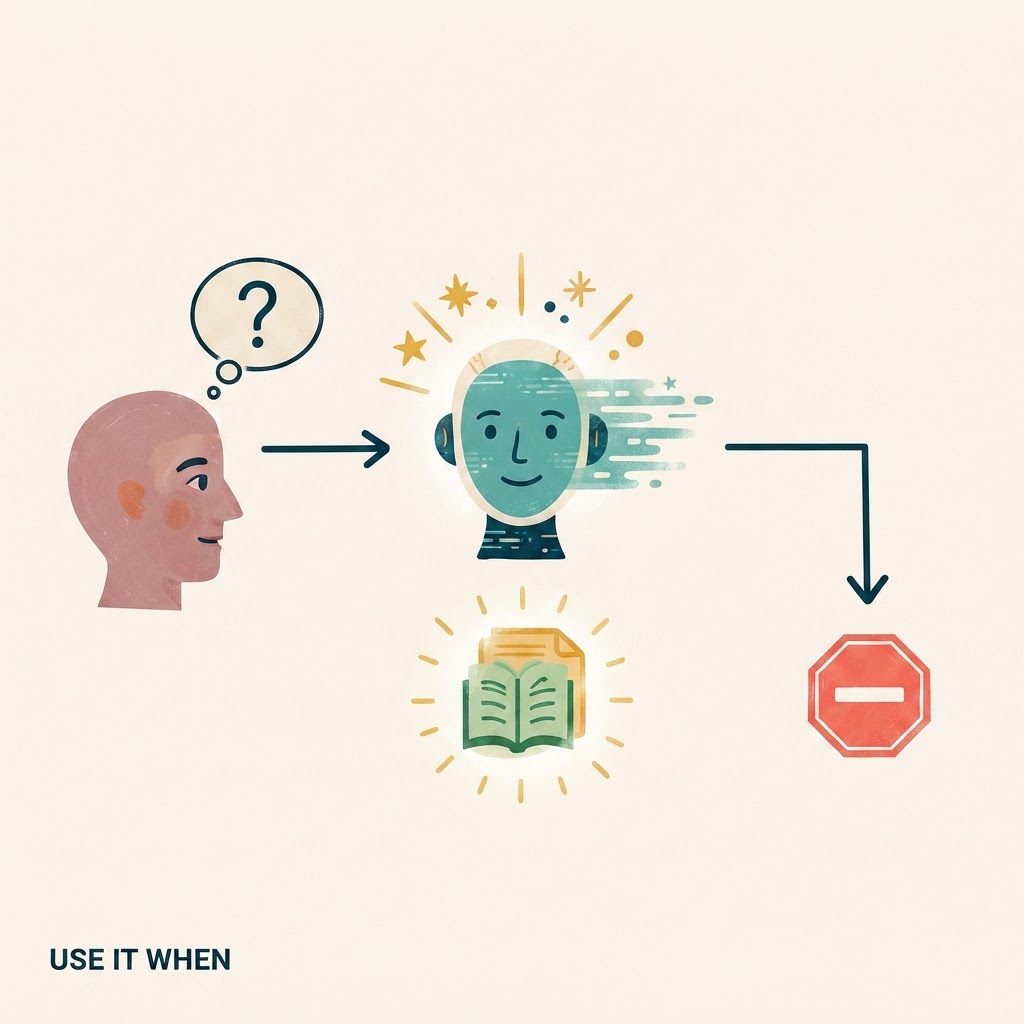
On one hand, AI can dramatically improve cognitive fitness when it encourages active thinking. It can ask probing questions, explain difficult concepts, identify weaknesses in reasoning, simulate debate, and provide personalized feedback. Used in this way, AI functions much like a coach who helps us develop stronger mental habits.
On the other hand, AI can quietly reduce opportunities for cognitive growth if we allow it to perform the thinking we are capable of doing ourselves.
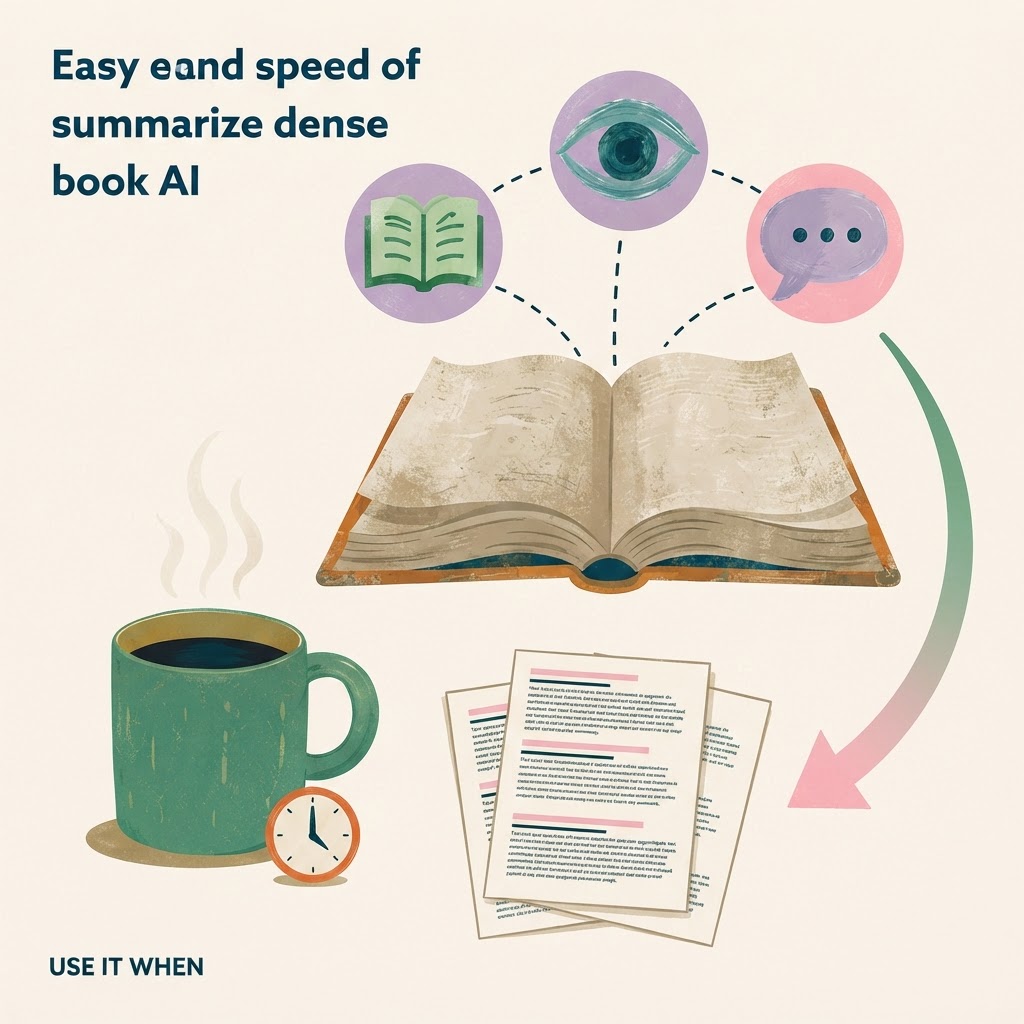
Imagine asking AI to summarize every article before reading it, generate every presentation, solve every difficult problem, or make every important decision. While this approach may save time in the short term, it also reduces opportunities to practise the very skills that develop expertise.
Learning scientists describe this principle through the concept of desirable difficulties. Activities that require effort—such as recalling information from memory, explaining ideas in your own words, or solving problems before seeing the solution—often produce stronger long-term learning than passive review.6
The implication is clear: convenience should not always be the goal. Sometimes the mental effort involved in learning is precisely what makes learning effective.
Small Habits, Lasting Change
Many people imagine cognitive development as something that happens only in classrooms or formal training programmes. In reality, cognitive fitness is shaped by small daily habits.
Reading thoughtfully rather than skimming.
Writing to clarify ideas rather than simply recording information.
Reflecting on decisions after they have been made.
Explaining concepts to other people.
Seeking constructive disagreement instead of surrounding ourselves with people who always agree.
Asking better questions before searching for answers.
None of these practices requires exceptional intelligence. They require consistency.
Over time, these seemingly ordinary habits compound. Just as regular physical exercise improves health over months and years, regular cognitive exercise gradually strengthens our ability to learn, reason, and make better decisions.
Measuring Progress Differently
Unlike physical fitness, cognitive fitness cannot be measured with a single score.
Instead, progress often appears indirectly.
You notice that you ask more thoughtful questions during meetings.
You recognize weaknesses in your own arguments before someone else points them out.
You become more comfortable changing your mind when presented with better evidence.
You solve unfamiliar problems with greater confidence because you understand underlying principles rather than memorized procedures.
Perhaps most importantly, you become increasingly aware of how much there is still to learn. Researchers studying expertise have long observed that genuine experts often display greater intellectual humility than novices because they better understand the complexity of their fields.7
This humility is not a weakness. It is one of the hallmarks of lifelong learning.
Cognitive Fitness Is a Lifelong Practice
There is no point at which someone becomes permanently cognitively fit.
The world changes. Knowledge evolves. Technology advances. New challenges emerge. Remaining adaptable requires continual learning and reflection throughout life.
Artificial intelligence will undoubtedly transform how we work, learn, and create. Yet its greatest value may not lie in replacing human thinking, but in creating new opportunities to strengthen it. Used intentionally, AI can help us ask better questions, explore different perspectives, test our understanding, and refine our reasoning.
Ultimately, cognitive fitness is less about keeping pace with technology than about developing the habits of mind that allow us to use technology wisely. In a future where information is abundant and intelligent tools are widely available, our ability to think clearly, learn continuously, and exercise sound judgment may become one of our most enduring competitive advantages.
Try This
Choose one activity you do regularly with AI—writing, studying, planning, or brainstorming.
Instead of asking AI to complete the task, ask it to help strengthen one cognitive skill.
For example:
- Ask it to quiz you before explaining a concept.
- Ask it to challenge your assumptions.
- Ask it to identify gaps in your reasoning.
- Ask it to suggest three alternative perspectives.
- Ask it to evaluate your explanation rather than generate one for you.
Notice how your role shifts from passive consumer to active thinker.
Key Takeaways
- Cognitive fitness is the ongoing practice of strengthening the mental abilities that support learning, reasoning, creativity, and decision-making.
- Effective thinking depends on skills that can be developed through deliberate practice rather than fixed intelligence alone.
- Attention, memory, reasoning, metacognition, and creativity all contribute to cognitive fitness.
- AI can either strengthen or weaken cognitive fitness depending on how it is used.
- Small, consistent thinking habits compound over time and build lasting cognitive capability.
Continue the Conversation
The AI Thinking Partner Playbook introduces seven practical frameworks for using AI to strengthen—not replace—your thinking. If you want to build lasting cognitive fitness and develop better habits of learning, reasoning, and reflection, download your free copy and begin training your mind.
References
-
Ericsson, K.A., Krampe, R.T. & Tesch-Römer, C. The role of deliberate practice in the acquisition of expert performance. Psychological Review 100, 363–406 (1993).
-
Posner, M.I. & Rothbart, M.K. Research on attention networks as a model for the integration of psychological science. Annual Review of Psychology 58, 1–23 (2007).
-
Roediger III, H.L. & Karpicke, J.D. Test-enhanced learning: Taking memory tests improves long-term retention. Psychological Science 17, 249–255 (2006).
-
Flavell, J.H. Metacognition and cognitive monitoring: A new area of cognitive-developmental inquiry. American Psychologist 34, 906–911 (1979).
-
Sawyer, R.K. Explaining Creativity: The Science of Human Innovation. 2nd edn. Oxford: Oxford University Press (2012).
-
Bjork, R.A. & Bjork, E.L. Making things hard on yourself, but in a good way: Creating desirable difficulties to enhance learning. In: Gernsbacher, M.A., Pew, R.W., Hough, L.M. & Pomerantz, J.R. (eds.) Psychology and the Real World: Essays Illustrating Fundamental Contributions to Society. New York: Worth Publishers, pp. 56–64 (2011).
-
Chi, M.T.H., Feltovich, P.J. & Glaser, R. Categorization and representation of physics problems by experts and novices. Cognitive Science 5, 121–152 (1981).
Enjoying this article?
Get more like it delivered to your inbox once a month.