Reading in the AI Era
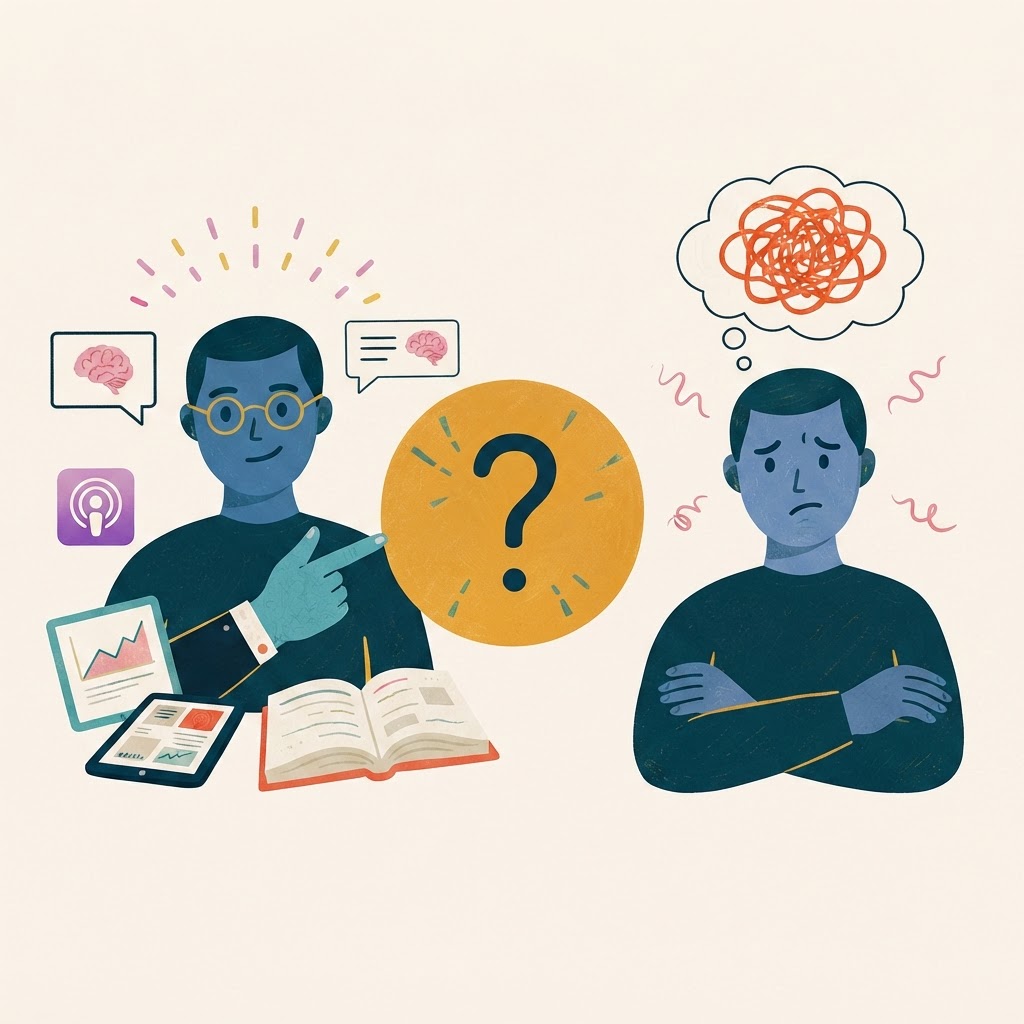
Imagine asking AI to summarise a 400-page book. Within moments, you receive a concise overview of the author's main arguments, key examples, and practical recommendations. The summary is clear, well organised, and remarkably accurate. Compared with spending ten hours reading the book yourself, the shortcut feels irresistible.
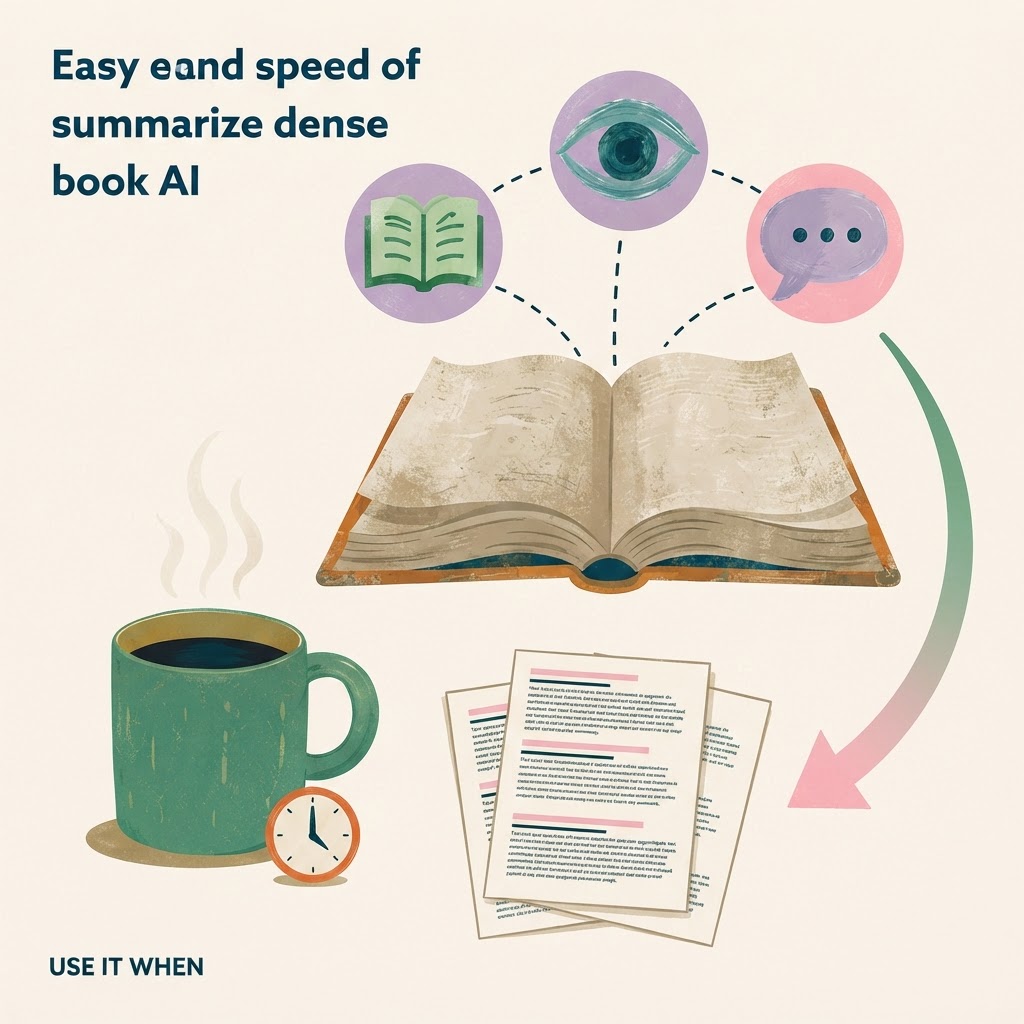
When AI can summarise almost any book in seconds, reading has become less about accessing information and more about developing understanding.
Imagine asking AI to summarise a 400-page book. Within moments, you receive a concise overview of the author's main arguments, key examples, and practical recommendations. The summary is clear, well organised, and remarkably accurate. Compared with spending ten hours reading the book yourself, the shortcut feels irresistible.
Yet something valuable has been left behind. Although you've gained the conclusions, you haven't experienced the thinking that produced them. You haven't wrestled with the arguments, noticed the nuances, questioned the assumptions, or connected the ideas to your own knowledge. You've acquired information, but not necessarily understanding.
Artificial intelligence has transformed access to knowledge. Information that once required days of searching can now be retrieved in seconds, making facts easier to obtain than at any other point in history. As a result, the role of reading is changing. Rather than serving primarily as a way to collect information, reading is becoming one of the most effective ways to strengthen attention, reasoning, curiosity, and judgment. In the AI era, its greatest value lies not in helping us know more, but in helping us think better.
Reading Is an Active Process
Many people think of reading as a passive activity, but effective reading is one of the brain's most demanding cognitive exercises. As we read, we continuously interpret language, connect ideas to prior knowledge, evaluate evidence, predict what comes next, and build increasingly sophisticated mental models of the topic.1
This process requires sustained attention. Unlike scrolling through short online posts, reading a book or long-form article asks us to remain engaged with a single line of thought for an extended period. We hold multiple ideas in working memory, compare concepts across chapters, and gradually refine our understanding as new evidence emerges.
These mental processes strengthen cognitive abilities that extend far beyond reading itself. They improve comprehension, reasoning, memory, and the capacity to think about complex problems without becoming overwhelmed by isolated facts. Reading is not simply consuming information—it is practising sustained thought.
The Difference Between Knowing and Understanding
AI excels at delivering answers, but understanding develops more slowly. Knowing that climate change is influenced by greenhouse gas emissions is different from understanding the scientific evidence, the competing policy debates, the economic trade-offs, and the uncertainty surrounding future predictions. Similarly, knowing the definition of confirmation bias is very different from recognising it in your own thinking or noticing how it influences important decisions.
Reading helps bridge this gap because it exposes us to complete arguments rather than isolated facts. Authors guide us through evidence, counterarguments, examples, and logical reasoning, allowing us to see not only what they believe but how they reached those conclusions. As we follow that reasoning, we begin evaluating the ideas for ourselves rather than simply accepting the final answer.
AI summaries can provide an excellent overview, particularly when deciding whether a book is relevant or refreshing knowledge we already possess. However, they often compress the intellectual journey that enables genuine learning. Skipping directly to the conclusions may save time, but it also bypasses much of the thinking that develops understanding.
Books Teach Us How Experts Think
Every well-written book represents years—sometimes decades—of careful thought. Researchers synthesise hundreds of studies. Historians analyse primary sources. Psychologists interpret complex experiments. Entrepreneurs reflect on decades of practical experience. By reading their work, we gain access not only to what they have learned but also to the ways they approach problems, organise evidence, and reach conclusions.
Books rarely present isolated facts. Instead, they reveal how experts construct arguments, weigh competing explanations, and navigate uncertainty.2 Over time, engaging with these ways of thinking gradually shapes our own reasoning. We begin to recognise patterns, ask better questions, and develop richer mental models that can be applied across different situations.
Reading widely across different disciplines amplifies this effect. Psychology, economics, history, philosophy, biology, and technology each offer distinctive ways of understanding the world. Bringing these perspectives together expands the range of ideas we can draw upon when solving problems or making decisions.
Slow Reading Builds Better Thinking
Modern technology encourages speed. We skim articles, scan headlines, and consume endless streams of short-form content. While this approach keeps us informed, it rarely provides the depth of understanding that comes from sustained engagement with a single idea.
Research suggests that slower, more reflective reading promotes stronger comprehension and better long-term retention.3 Pausing to consider an argument, rereading a difficult paragraph, making notes in the margin, or connecting a new concept to something you already know all strengthen learning by forcing the brain to actively process the material rather than merely recognise it.
This process can feel uncomfortable because complex books demand concentration. They introduce unfamiliar concepts, challenge existing assumptions, and require us to tolerate periods of uncertainty before understanding emerges. Those moments of difficulty are often where the deepest learning occurs, as the brain works to build new connections between ideas. Reading slowly is therefore not an inefficient way to consume information. It is a deliberate investment in developing better judgment, stronger reasoning, and deeper understanding.
AI Can Become Your Reading Companion
Artificial intelligence changes the way we read, but it does not eliminate the need to read. Instead, it creates new opportunities to deepen our engagement with books and articles by turning reading into an ongoing conversation. Imagine reading a chapter on behavioural economics. Rather than asking AI for a summary before you begin, read the chapter yourself. Afterwards, ask AI to quiz your understanding, challenge your interpretation, compare the author's ideas with alternative viewpoints, or explain concepts that remained unclear.
Questions such as these can transform the experience:
- What assumptions is this author making?
- Which arguments are supported by the strongest evidence?
- How would another expert disagree with these conclusions?
- Help me connect these ideas to something I learned previously.
- Ask me questions that test whether I genuinely understood this chapter.
Used in this way, AI becomes a thinking partner rather than a replacement for the reading process. Its greatest value lies in extending our reflection, encouraging deeper analysis, and revealing perspectives we might otherwise overlook.
Reading Across Disciplines Creates Better Ideas
Some of the most creative thinkers rarely limit themselves to one subject. They read psychology alongside economics, biology alongside design, philosophy alongside technology, and history alongside business. This breadth allows them to recognise unexpected connections between ideas that others might never consider.
Cognitive scientists describe creativity as the ability to combine existing knowledge in novel ways.4 The richer and more diverse our knowledge base becomes, the greater the opportunity for these unexpected combinations to emerge. Ideas developed in one discipline often provide fresh solutions to problems in another because they introduce different assumptions, methods, and ways of seeing the world. AI can certainly recommend books, identify relevant research, or highlight emerging topics, but the insights themselves still depend on building a broad network of knowledge through sustained reading, reflection, and curiosity.
Reading Builds Cognitive Fitness
The arrival of AI has not reduced the importance of reading. Instead, it has changed what reading is for. When information becomes abundant, the scarce resource is no longer access to knowledge but the ability to interpret, question, connect, and apply it wisely. Reading remains one of the most effective ways to develop those capabilities because it strengthens attention, expands perspective, builds empathy, and improves our capacity for careful reasoning.
This perspective sits at the heart of cognitive fitness. Reading is not about finishing as many books as possible or accumulating facts that AI could retrieve instantly. It is about cultivating the habits of curiosity, reflection, intellectual humility, and deep thinking that help us make better decisions throughout our lives. Every thoughtful book becomes an opportunity to strengthen these mental habits by engaging with ideas that challenge, refine, and expand our understanding.
Artificial intelligence has made information more accessible than ever before, but wisdom still develops through sustained engagement with ideas. The future will belong not to those who consume the most information, but to those who can think critically about it, connect it across disciplines, and apply it with sound judgment.
Try This
The next time you read a book or long-form article, resist the temptation to ask AI for a summary first. Instead:
- Read one chapter.
- Write a short summary in your own words.
- Identify one idea you agree with and one you question.
- Then ask AI:
Act as a discussion partner. Test my understanding of this chapter, challenge my interpretation, compare the author's ideas with alternative perspectives, and ask questions that help me think more deeply rather than simply remember the content.
Notice how the conversation strengthens your understanding instead of replacing the reading process.
Key Takeaways
- Reading develops understanding, not just knowledge.
- Books teach us how experts organise ideas, evaluate evidence, and build arguments.
- Slow, reflective reading strengthens comprehension and long-term learning.
- AI is most valuable after reading, helping deepen understanding through discussion and reflection.
- Cognitive fitness grows when reading becomes an active process of questioning, connecting, and applying ideas.
Continue the Conversation
The AI Thinking Partner Playbook introduces seven practical frameworks for using AI to strengthen—not replace—your thinking. The Socratic Guide, Teaching Test, and Perspective Expander frameworks help you transform reading into an active conversation by using AI to test your understanding, challenge assumptions, and connect ideas across disciplines. Download your free copy and begin building the cognitive fitness needed to thrive in the AI era.
References
-
Wolf, M. Reader, Come Home: The Reading Brain in a Digital World. New York: Harper (2018).
-
Ericsson, K.A., Charness, N., Feltovich, P.J. & Hoffman, R.R. (eds.) The Cambridge Handbook of Expertise and Expert Performance. Cambridge: Cambridge University Press (2006).
-
Delgado, P., Vargas, C., Ackerman, R. & Salmerón, L. Don't throw away your printed books: A meta-analysis on the effects of reading media on comprehension. Educational Research Review 25, 23–38 (2018).
-
Sawyer, R.K. Explaining Creativity: The Science of Human Innovation. 2nd edn. Oxford: Oxford University Press (2012).
-
Wolf, M. Proust and the Squid: The Story and Science of the Reading Brain. New York: HarperCollins (2007).
-
Kahneman, D. Thinking, Fast and Slow. London: Penguin Books (2011).
-
Brown, P.C., Roediger III, H.L. & McDaniel, M.A. Make It Stick: The Science of Successful Learning. Cambridge, MA: Harvard University Press (2014).
Enjoying this article?
Get more like it delivered to your inbox once a month.