AI as a Socratic Teacher
When most people use artificial intelligence, the interaction follows a familiar pattern. They ask a question, AI provides an answer, and the conversation ends. The process is efficient, convenient, and often remarkably useful. If the goal is finding information quickly, this approach works well.
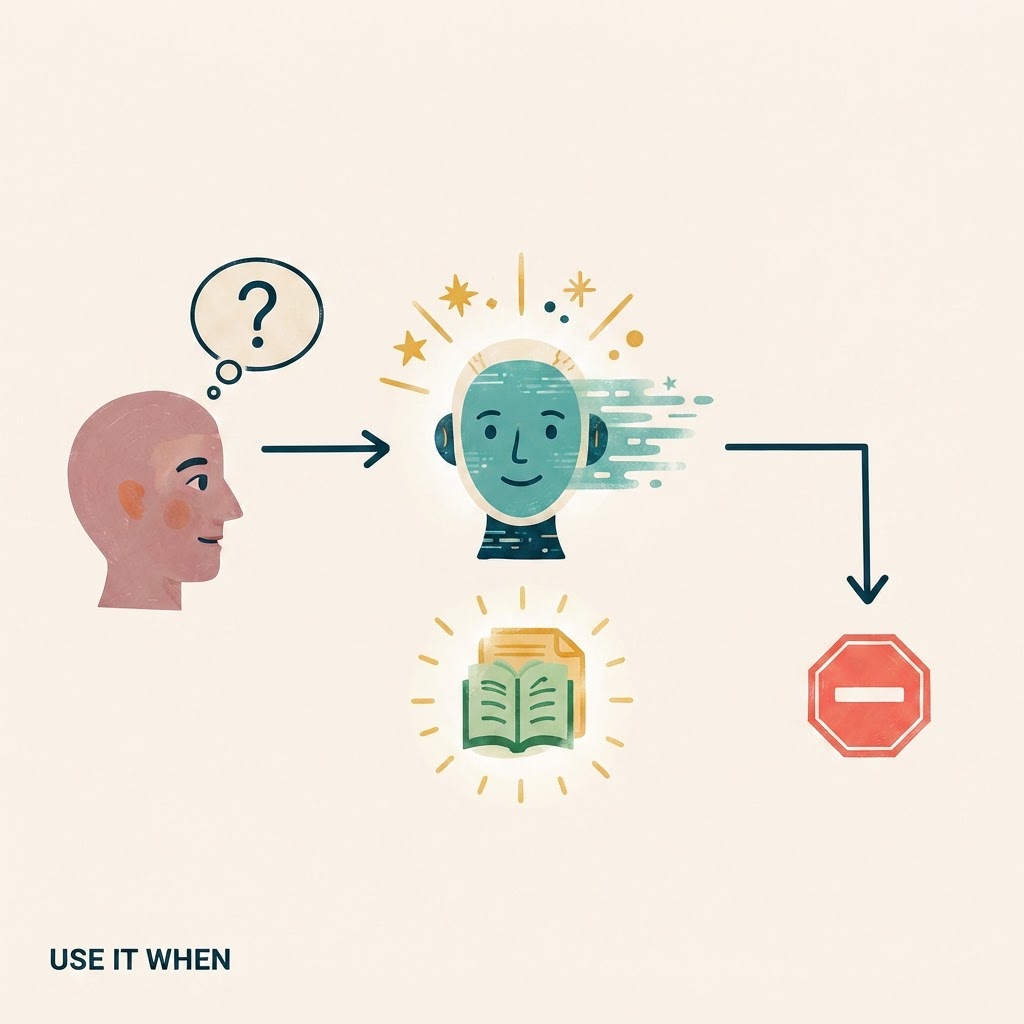
The most valuable use of AI may not be giving answers. It may be asking better questions.
When most people use artificial intelligence, the interaction follows a familiar pattern. They ask a question, AI provides an answer, and the conversation ends. The process is efficient, convenient, and often remarkably useful. If the goal is finding information quickly, this approach works well.
Learning, however, is rarely driven by answers alone.
Think back to a teacher, mentor, or colleague who had the greatest influence on your thinking. Chances are they did more than explain concepts. They challenged your assumptions, asked difficult questions, encouraged you to justify your reasoning, and helped you discover answers for yourself. Their value came not from telling you what to think but from improving how you thought.
This style of learning has deep historical roots. More than two thousand years ago, the Greek philosopher Socrates developed a method of teaching based almost entirely on questioning rather than lecturing.1 Today, artificial intelligence gives us an opportunity to bring that same approach into our everyday learning. Used well, AI can become a modern Socratic teacher—one that develops reasoning instead of simply delivering information.
The Socratic Method
Socrates believed that genuine understanding could not simply be transferred from one person to another.
Instead of presenting answers, he asked carefully chosen questions that encouraged people to examine their own beliefs. A typical conversation might begin with a seemingly simple claim before gradually uncovering hidden assumptions, contradictions, or incomplete reasoning. The objective was not to embarrass the learner but to guide them toward clearer thinking through reflection and dialogue.
This approach remains influential because it treats learning as an active process rather than a passive one. Educational research consistently shows that learners retain more knowledge and develop deeper understanding when they actively construct ideas instead of simply receiving information.2
Questions therefore become more than requests for information. They become tools for reasoning, self-awareness, and intellectual growth.
Why Questions Create Better Learning
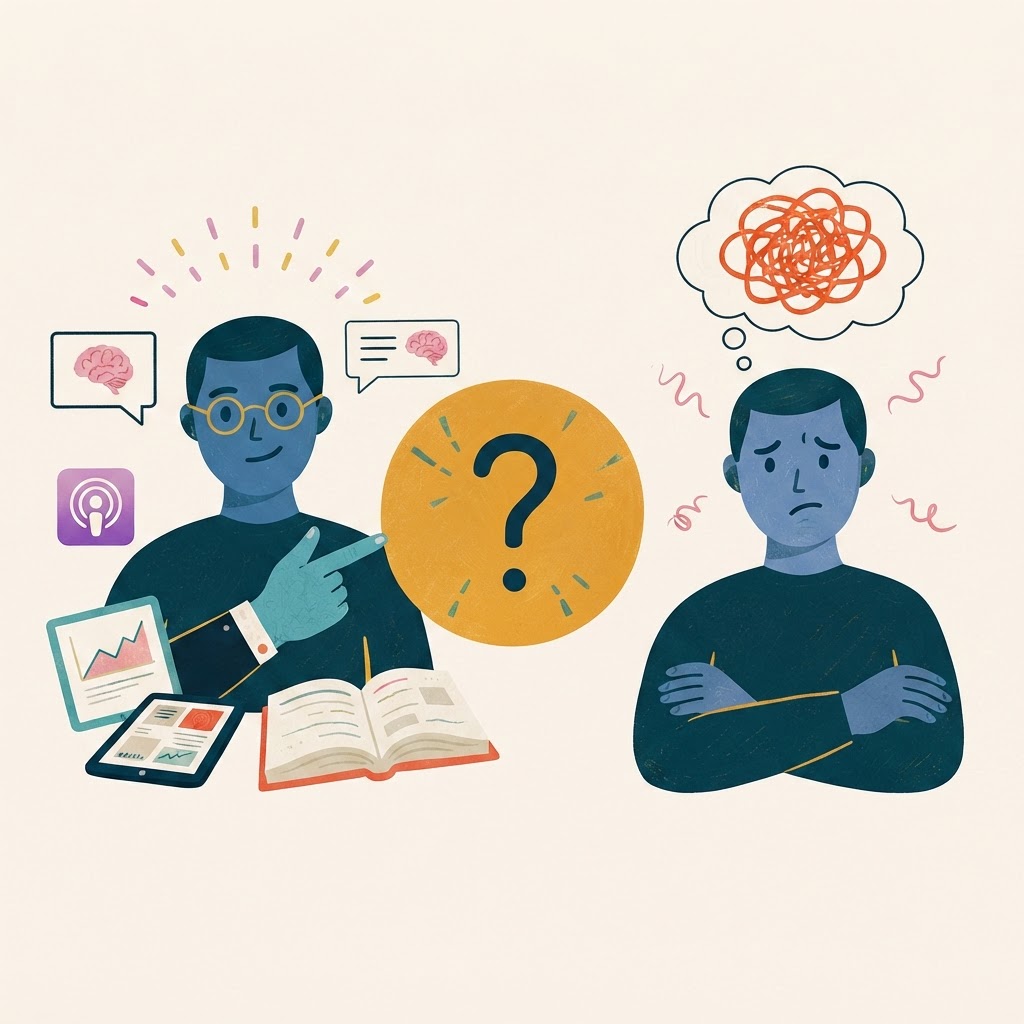
When someone immediately gives us an answer, our brains often remain relatively passive. We may understand the explanation, but little mental effort is required beyond recognising the information.
Questions change that dynamic.
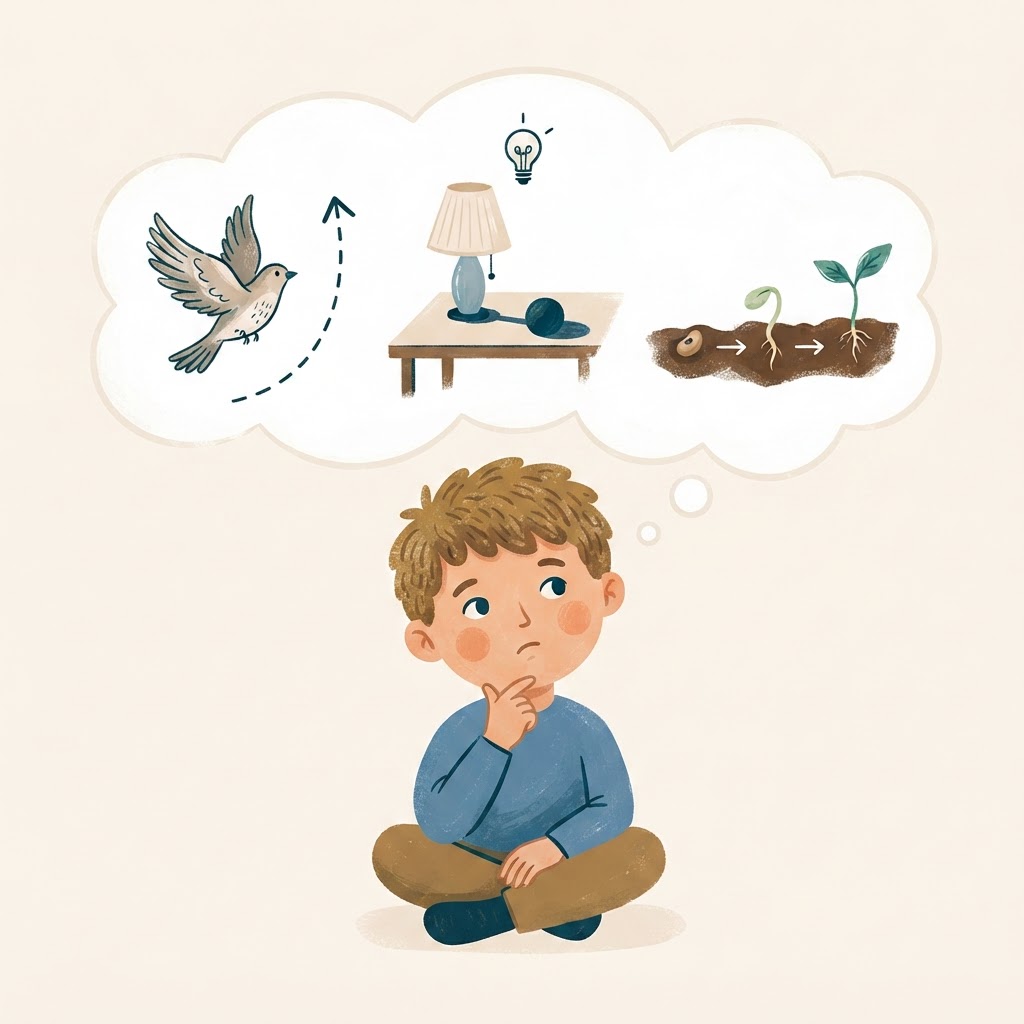
A thoughtful question forces us to search our memory, organise our knowledge, identify gaps in understanding, and evaluate possible explanations before arriving at a response. This active process strengthens learning because it requires retrieval, reasoning, and reflection rather than simple recognition.3
Imagine asking AI, "What causes inflation?"
Receiving a clear explanation is useful.
Now imagine AI responding differently.
"Before we explore inflation, how would you define it in your own words?"
"What factors do you already think influence prices?"
"Can you think of a situation where prices increased without inflation?"
By the time AI provides its explanation, you have already begun constructing your own understanding. The answer becomes easier to remember because your mind has actively prepared for it.
Learning Through Productive Struggle
One reason the Socratic method is so effective is that it embraces productive difficulty.
Educational psychologists describe these kinds of challenges as desirable difficulties—learning experiences that require greater mental effort but produce stronger long-term understanding.4 Rather than making learning easier, good questions make thinking more deliberate.
This can feel uncomfortable at first.
When AI refuses to provide an immediate answer and instead asks us to explain our reasoning, it may seem slower than simply requesting information. Yet that temporary effort often leads to deeper learning because we become participants in the reasoning process instead of observers.
The goal is not to make learning harder for its own sake. The goal is to ensure that our brains remain actively engaged in constructing knowledge rather than passively consuming it.
AI as a Thinking Partner
Artificial intelligence is uniquely suited to Socratic teaching because it can adapt its questions to the learner.
Unlike a textbook, AI can respond to your explanations, identify misunderstandings, ask follow-up questions, and adjust its level of difficulty in real time. If you demonstrate strong understanding, it can introduce more complex scenarios. If you are struggling, it can simplify concepts without abandoning the questioning process.
This creates a very different relationship with AI.
Instead of asking AI to solve problems immediately, you invite it to help you solve them yourself. Rather than requesting summaries, you ask it to test your understanding. Instead of relying on AI to generate conclusions, you ask it to challenge yours.
In this role, AI becomes less like a search engine and more like a thoughtful tutor who is invested in developing your reasoning.
Better Prompts Create Better Thinking
The quality of AI's questions depends largely on the prompts we provide.
Many people ask AI to explain a topic as efficiently as possible. While this saves time, it often removes the cognitive effort that strengthens learning. Small changes in prompting can completely transform the interaction.
Instead of saying:
"Explain first-principles thinking."
Try asking:
"Teach me first-principles thinking using the Socratic method. Ask one question at a time. Don't give me the answer until I've attempted my own explanation. Challenge my assumptions and adapt your questions based on my responses."
The difference is significant.
The first prompt requests information.
The second creates an active learning experience.
This approach works equally well for professional development, leadership, decision-making, language learning, creative thinking, and technical subjects. AI becomes a guide that helps you think rather than a machine that thinks for you.
Socratic Prompts for Everyday Learning
One of the simplest ways to use AI as a Socratic teacher is to ask it to adopt specific questioning behaviours.
For example, you might ask AI to:
- Question my assumptions before offering solutions.
- Ask me to explain concepts in my own words.
- Challenge weak reasoning with follow-up questions.
- Present alternative perspectives before reaching conclusions.
- Test my understanding with increasingly difficult questions.
- Help me identify what I don't yet understand.
- Avoid giving direct answers until I've attempted my own reasoning.
These prompts shift the focus from information retrieval to cognitive development. Over time, they help build habits of reflection that become increasingly automatic even when AI is not present.
The Goal Is Independent Thinking
The greatest teachers measure success by the independence of their students.
Their objective is not to create lifelong dependence but to develop people who can think confidently for themselves. The Socratic method has endured for centuries because it strengthens the habits of reasoning rather than simply expanding knowledge.
Artificial intelligence should aspire to the same standard.
If every conversation ends with AI providing the answer, we become increasingly dependent on external intelligence. If every conversation strengthens our ability to reason, question, explain, and reflect, we become more capable independent thinkers.
This distinction lies at the heart of cognitive fitness. Strong thinkers are not those who memorise the most information or ask AI the best questions. They are those who continually strengthen their own reasoning through deliberate practice. AI becomes valuable not because it replaces thinking, but because it creates more opportunities to practise it.
The future of learning may therefore depend less on how intelligent AI becomes and more on how intelligently we choose to use it. When AI acts as a Socratic teacher rather than an answer machine, every conversation becomes an opportunity to develop one skill that remains uniquely human: the ability to think well.
Try This
Open your preferred AI assistant and use this prompt:
Act as a Socratic teacher rather than an expert. I want to learn about [topic]. Ask one question at a time. Don't give me the answer immediately. Help me discover the answer by challenging my assumptions, asking follow-up questions, and encouraging me to explain my reasoning. At the end, summarise what I learned and identify any gaps in my understanding.
Compare this experience with simply asking AI for an explanation. Notice which approach helps you remember more, think more deeply, and identify what you still need to learn.
Key Takeaways
- The Socratic method develops understanding through questioning rather than explanation.
- Active reasoning produces stronger learning than passive consumption of information.
- AI can become a personalised tutor by asking thoughtful, adaptive questions.
- Better prompts transform AI from an answer generator into a thinking partner.
- Using AI as a Socratic teacher strengthens cognitive fitness by encouraging independent reasoning rather than dependence on AI.
Continue the Conversation
The AI Thinking Partner Playbook introduces seven practical frameworks for using AI to strengthen—not replace—your thinking. The Socratic Guide framework shows you how to transform everyday AI conversations into opportunities for deeper learning, stronger reasoning, and lasting cognitive fitness. Download your free copy and begin building the habit of thinking with AI instead of simply asking it for answers.
References
-
Plato. Meno. Translated by G.M.A. Grube. In: Cooper, J.M. (ed.) Plato: Complete Works. Indianapolis: Hackett Publishing (1997).
-
Fiorella, L. & Mayer, R.E. Learning as a Generative Activity: Eight Learning Strategies That Promote Understanding. Cambridge: Cambridge University Press (2015).
-
Roediger III, H.L. & Karpicke, J.D. Test-enhanced learning: Taking memory tests improves long-term retention. Psychological Science 17, 249–255 (2006).
-
Bjork, R.A. & Bjork, E.L. Making things hard on yourself, but in a good way: Creating desirable difficulties to enhance learning. In: Gernsbacher, M.A., Pew, R.W., Hough, L.M. & Pomerantz, J.R. (eds.) Psychology and the Real World: Essays Illustrating Fundamental Contributions to Society. New York: Worth Publishers, pp. 56–64 (2011).
-
Brown, P.C., Roediger III, H.L. & McDaniel, M.A. Make It Stick: The Science of Successful Learning. Cambridge, MA: Harvard University Press (2014).
-
Chi, M.T.H. Active-constructive-interactive: A conceptual framework for differentiating learning activities. Topics in Cognitive Science 1, 73–105 (2009).
-
Mollick, E. Co-Intelligence: Living and Working with AI. New York: Portfolio (2024).
Enjoying this article?
Get more like it delivered to your inbox once a month.