Systems Thinking for Everyday Life
Imagine your workplace is struggling with low employee engagement. One response might be to increase salaries or introduce new incentives. Those changes may help, but they might also fail if the underlying issues involve poor communication, unclear leadership, excessive workloads, or limited opportunities for growth.
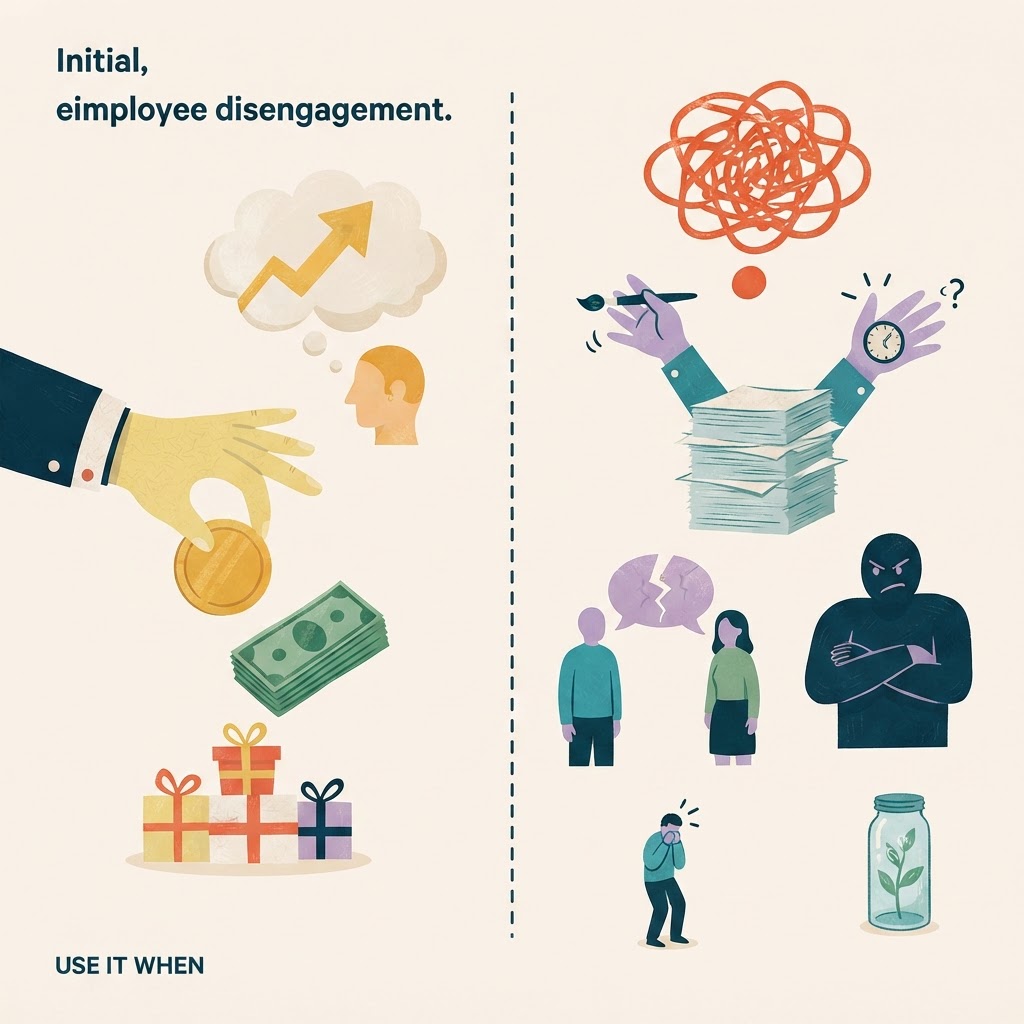
Most problems don't exist in isolation. They emerge from systems of relationships, feedback, and unintended consequences.
Imagine your workplace is struggling with low employee engagement. One response might be to increase salaries or introduce new incentives. Those changes may help, but they might also fail if the underlying issues involve poor communication, unclear leadership, excessive workloads, or limited opportunities for growth.
Now imagine trying to improve your personal productivity. You purchase a new planner, install another task management app, and reorganise your calendar. For a few weeks, everything feels more organised before old habits gradually return. The problem was never the planner. It was the larger system of habits, priorities, energy levels, interruptions, and routines that shaped your behaviour.
Many of life's challenges follow this pattern. We often focus on individual events because they are visible and immediate while overlooking the broader systems that produce them. Systems thinking offers a different perspective. Rather than asking, "What happened?", it asks, "What interactions caused this outcome, and how are they connected?"1 In an increasingly complex world, this shift in perspective is becoming one of the most valuable thinking skills we can develop. Artificial intelligence can analyse enormous amounts of information, but understanding how different parts of a system influence one another remains a fundamentally human responsibility.
What Is Systems Thinking?
A system is a collection of interconnected parts that work together to produce a particular outcome. Those parts might include people, organisations, technologies, habits, policies, incentives, environments, or biological processes. What matters is not simply the individual components but the relationships between them.
Systems thinking is the practice of understanding those relationships. Instead of viewing events as isolated incidents, it looks for patterns, interactions, and structures that explain why those events occur. As systems scientist Donella Meadows observed, the behaviour of a system often emerges from the way its parts interact rather than from the parts themselves.2
Consider a garden. Healthy plants depend on sunlight, water, soil quality, insects, microorganisms, temperature, and countless other factors. Changing one element often affects many others. Removing pollinating insects influences fruit production. Altering irrigation changes soil conditions. Introducing a new species may benefit one plant while harming another. Looking at any single factor in isolation provides only a partial explanation of what is happening.
The same principle applies to businesses, families, communities, economies, and even our own thinking. Once we begin seeing relationships instead of isolated events, many problems that once appeared confusing become easier to understand.
Events Are the Tip of the Iceberg
One of the most widely used models in systems thinking is the Iceberg Model. It reminds us that the events we notice are only the visible portion of a much larger system.3 What we experience day to day is often the final expression of deeper structures that have been shaping outcomes for months or even years.
When a project misses its deadline, the missed deadline is simply the event. Beneath that event may lie recurring patterns such as unrealistic planning, poor communication, or unclear priorities. Beneath those patterns are organisational structures, incentives, and cultural norms that encourage certain behaviours. At the deepest level lie the mental models—the beliefs and assumptions—that influence how people understand the situation in the first place.
The temptation is to respond only to what we can see. If deadlines are missed, we schedule more meetings. If customers complain, we create new policies. If productivity falls, we introduce another software tool. These responses may address symptoms without changing the system that produced them. Systems thinking encourages us to look beneath the surface before deciding where intervention is likely to have the greatest effect.
Feedback Loops Shape Behaviour
One reason systems can be difficult to understand is that causes and effects rarely move in straight lines. Instead, they often form feedback loops, where one action influences another, which eventually influences the original action.
Some feedback loops reinforce change. Imagine someone begins exercising regularly. Increased fitness improves energy levels, making it easier to maintain the exercise habit. Better health improves sleep, which further increases energy and motivation. Each improvement strengthens the next, creating what systems thinkers call a reinforcing loop that supports long-term change.
Other feedback loops promote stability. A thermostat provides a familiar example. When a room becomes colder than the desired temperature, the heating system activates. As the room warms, the heating switches off. This balancing loop continually adjusts conditions to maintain equilibrium.
Many aspects of everyday life operate through similar mechanisms. Financial habits, workplace culture, relationships, public health, and environmental systems all involve interacting feedback loops that shape future outcomes. Recognising these patterns helps us move beyond reacting to individual events and toward understanding the forces that sustain them.
Small Changes Can Produce Large Effects
One of the most surprising insights from systems thinking is that not all interventions have equal impact. Sometimes enormous effort produces very little change because it targets symptoms rather than causes. At other times, a relatively small adjustment transforms an entire system because it addresses a critical point of influence.
Donella Meadows described these influential points as leverage points—places within a system where carefully chosen changes can produce disproportionately large effects.4 Finding these leverage points often requires patience because they are rarely the most obvious parts of a system.
Consider education. Simply increasing the number of assignments may do little to improve learning if students continue relying on ineffective study habits. Teaching retrieval practice, reflection, and active learning strategies, however, changes how students engage with knowledge itself. The intervention is relatively small, but the effects may extend across every subject they study.
The same principle applies to organisations. Improving communication between departments may have a greater long-term impact than introducing another reporting process because it changes the relationships through which information flows. Effective problem-solvers therefore spend considerable time identifying leverage points before deciding how to act.
Systems Thinking and AI
Artificial intelligence is exceptionally good at analysing information, identifying patterns, and modelling complex relationships. These capabilities make it a valuable partner for systems thinking because they allow us to examine interactions that would otherwise be difficult to detect.
Suppose you are trying to improve customer satisfaction. AI can analyse survey responses, identify recurring themes, map workflows, and highlight correlations that might otherwise remain hidden. It can generate diagrams showing how different variables interact or simulate the potential consequences of proposed changes.
These capabilities are valuable, but they represent only part of the process. Systems thinking also requires judgment. Someone must decide which variables matter, which outcomes are desirable, which trade-offs are acceptable, and which assumptions deserve further examination. AI can model systems, but people remain responsible for defining their purpose.
One productive way to use AI is to ask it not for immediate solutions but for better maps of the problem. Questions such as "What factors influence this outcome?", "What feedback loops might exist?", "Which assumptions am I overlooking?", "What unintended consequences could emerge?", and "Where might the highest leverage points be?" encourage AI to support systems thinking rather than bypass it.
Seeing Everyday Life as a System
Systems thinking is not reserved for engineers, economists, or organisational consultants. It can improve the way we approach many ordinary situations because almost every aspect of life involves interconnected relationships rather than isolated events.
When trying to build healthier habits, think beyond willpower and examine sleep, stress, environment, routines, and social influences. When resolving conflict, consider how communication patterns, expectations, incentives, and past experiences interact. When making financial decisions, look beyond individual purchases and examine the habits, goals, and beliefs that shape spending over time. When learning something new, consider not only the material itself but also the systems that influence learning—attention, retrieval practice, reflection, curiosity, and feedback.
Viewing these situations as systems encourages deeper understanding because it shifts attention from isolated events to recurring relationships. Instead of constantly reacting to problems after they appear, we begin designing environments that naturally produce better outcomes.
Thinking in Relationships
Much of modern life encourages linear thinking. A problem appears, we search for a cause, and we implement a solution. Real life is rarely that simple because most meaningful challenges emerge from networks of interacting causes rather than single explanations.
Systems thinking reminds us that outcomes are often the result of relationships, feedback loops, delays, and assumptions that unfold over time. Learning to recognise those relationships helps us become more thoughtful decision-makers because we begin asking different questions before acting. Rather than seeking quick fixes, we become more interested in understanding why systems behave the way they do.
This perspective aligns closely with cognitive fitness. Strong thinkers do not merely solve individual problems. They become increasingly skilled at recognising patterns, understanding complexity, and seeing connections that others overlook. Artificial intelligence can help us analyse complexity more quickly than ever before, but understanding what those patterns mean—and deciding how we should respond—remains one of the most valuable human capabilities. As our tools become more powerful, our ability to think systemically may become one of the defining skills of the age of AI.
Try This
Choose a recurring problem in your work or personal life.
Instead of asking, "How do I fix this?", draw a simple systems map.
Identify:
- The key people, habits, or processes involved.
- The relationships between them.
- Any feedback loops that reinforce the problem.
- The assumptions influencing the system.
- One possible leverage point where a small change could have a meaningful effect.
Then ask AI to review your systems map and suggest relationships, unintended consequences, or leverage points you may have overlooked.
Key Takeaways
- Systems thinking focuses on relationships rather than isolated events.
- Many recurring problems arise from underlying structures, feedback loops, and assumptions.
- Small changes at high-leverage points often produce greater impact than large changes aimed at symptoms.
- AI can help map complex systems, but human judgment remains essential for defining goals and evaluating trade-offs.
- Systems thinking strengthens cognitive fitness by helping us understand complexity, recognise patterns, and make more informed decisions.
Continue the Conversation
The AI Thinking Partner Playbook introduces seven practical frameworks for using AI to strengthen—not replace—your thinking. The First-Principles Co-pilot and Scenario Builder frameworks help you analyse complex systems, challenge assumptions, and explore the wider consequences of your decisions. Download your free copy and begin developing the cognitive fitness needed to think more systemically in the age of AI.
References
-
Senge, P.M. The Fifth Discipline: The Art and Practice of the Learning Organization. New York: Doubleday (1990).
-
Meadows, D.H. Thinking in Systems: A Primer. White River Junction, VT: Chelsea Green Publishing (2008).
-
Goodman, M. The Systems Thinking Playbook: Exercises to Stretch and Build Learning and Systems Thinking Capabilities. Pegasus Communications (1997).
-
Meadows, D.H. Leverage Points: Places to Intervene in a System. Sustainability Institute (1999).
-
Sterman, J.D. Business Dynamics: Systems Thinking and Modeling for a Complex World. Boston: Irwin/McGraw-Hill (2000).
-
Simon, H.A. The Sciences of the Artificial. 3rd edn. Cambridge, MA: MIT Press (1996).
-
Norman, D.A. The Design of Everyday Things. Revised and expanded edition. New York: Basic Books (2013).
Enjoying this article?
Get more like it delivered to your inbox once a month.