How to Evaluate Evidence
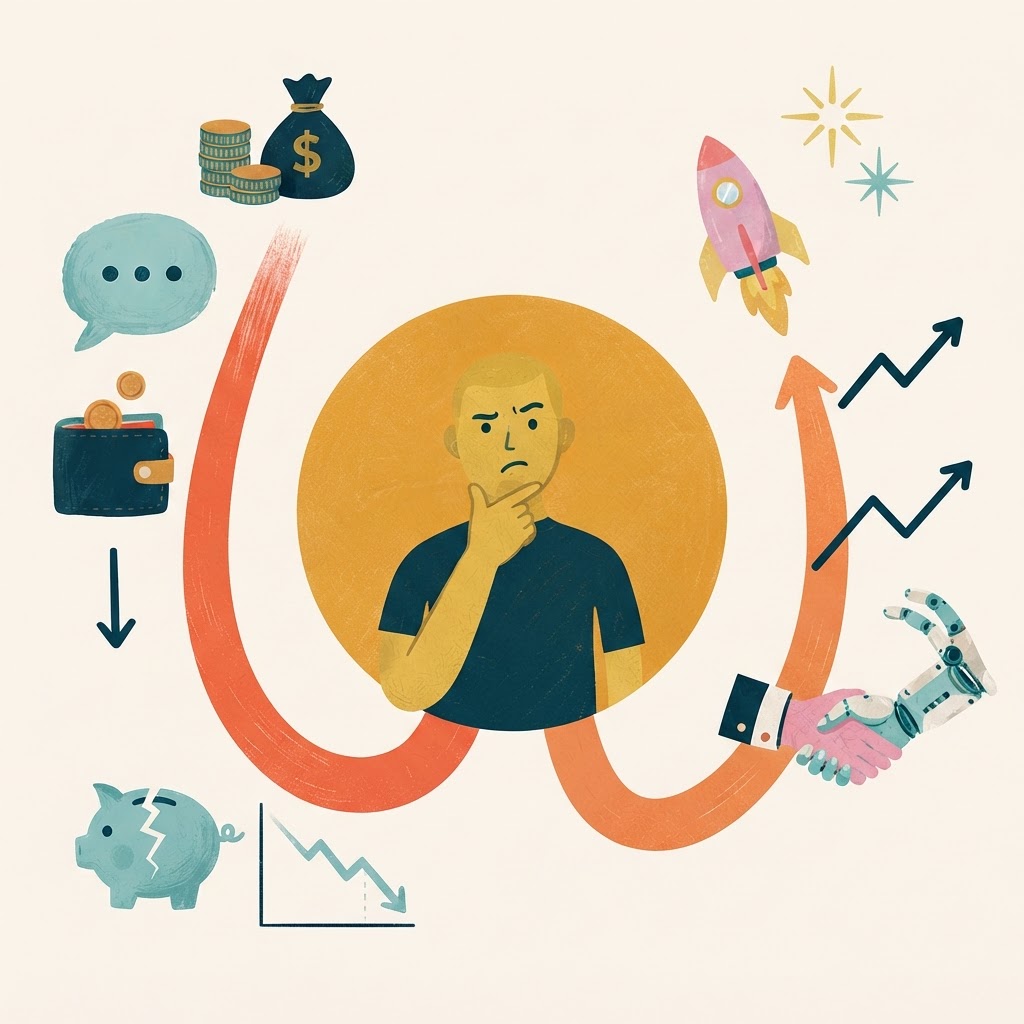
Imagine searching for advice about nutrition, investing, education, or artificial intelligence. Within minutes, you're presented with thousands of articles, videos, podcasts, and social media posts. Some confidently contradict one another. One expert insists coffee is beneficial, while another warns it is harmful. One headline claims AI will replace most jobs, while another argues the technology is wildly overhyped. Access to information is no longer the problem. The real challenge is deciding what deserves our trust.
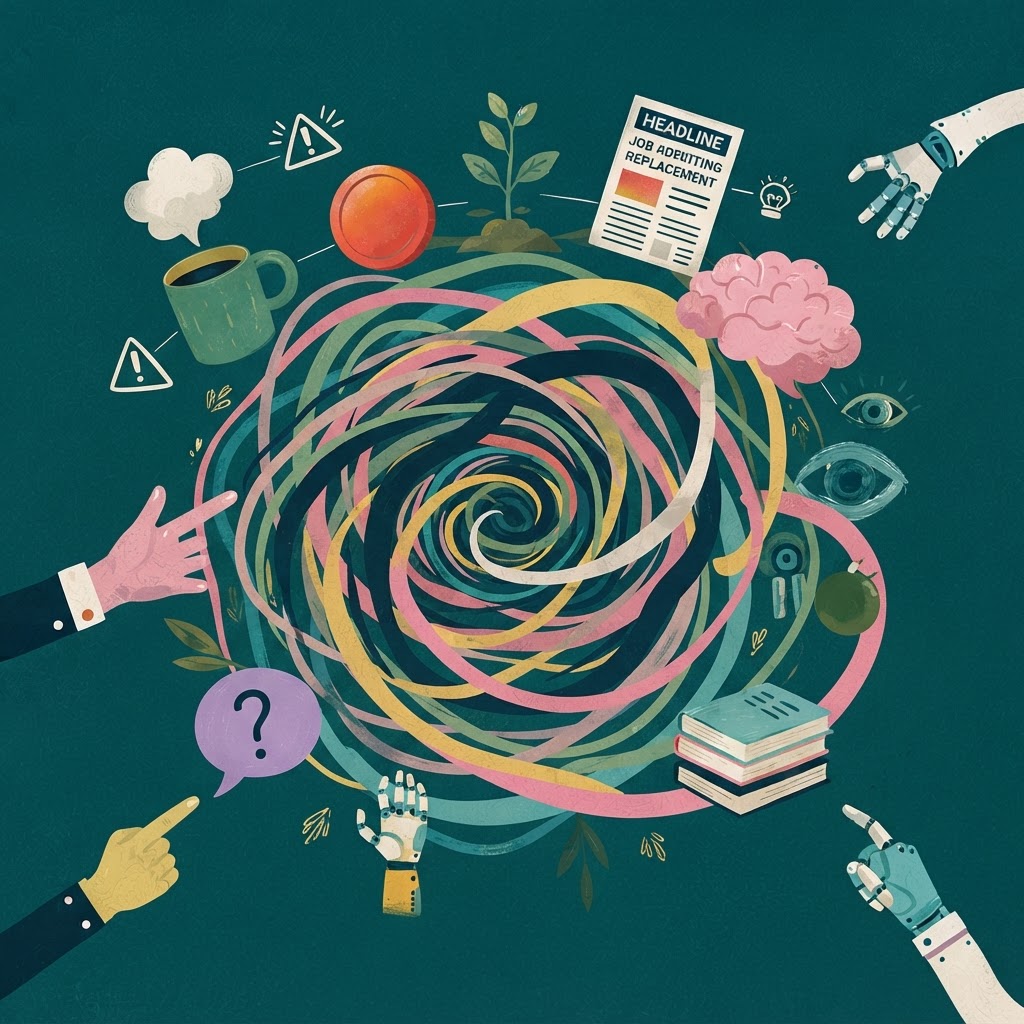
In a world overflowing with information, the ability to judge evidence has become more valuable than the ability to find it.
Imagine searching for advice about nutrition, investing, education, or artificial intelligence. Within minutes, you're presented with thousands of articles, videos, podcasts, and social media posts. Some confidently contradict one another. One expert insists coffee is beneficial, while another warns it is harmful. One headline claims AI will replace most jobs, while another argues the technology is wildly overhyped. Access to information is no longer the problem. The real challenge is deciding what deserves our trust.
For most of human history, knowledge was scarce. Today, knowledge is abundant, and search engines and AI assistants can retrieve facts almost instantly. What they cannot do is determine which claims are well supported, which are speculative, and which are simply wrong. That responsibility still belongs to us. As information becomes easier to access, evaluating evidence is becoming one of the defining skills of the twenty-first century. It allows us to distinguish between careful reasoning and persuasive rhetoric, between reliable research and confident opinion, and between information that helps us make better decisions and information that merely captures our attention.
Not All Evidence Is Created Equal
One of the most common mistakes people make is assuming that all evidence carries equal weight. In reality, different kinds of evidence provide different levels of confidence, and understanding those differences is essential for good decision-making.
Imagine someone claims that a particular productivity method doubled their output. Their personal experience may be entirely genuine, but it tells us very little about whether the same approach would work for thousands of other people. Individual stories are valuable because they generate ideas and raise interesting questions. They become far less reliable when treated as proof that something is universally effective.
Scientific research exists partly because human experience is so easily influenced by coincidence, selective memory, expectation, and cognitive bias.1 Carefully designed studies attempt to reduce these influences by using larger samples, comparison groups, transparent methods, and statistical analysis. Even then, evidence varies considerably in quality. Small studies may produce unreliable findings, poorly designed experiments can introduce bias, and results sometimes fail to replicate when repeated by other researchers. Evaluating evidence therefore requires looking beyond conclusions to understand how those conclusions were reached.
Consider the Source
Whenever you encounter a new claim, one of the first questions to ask is where the information originated. The credibility of a source does not automatically determine whether a claim is true, but it provides valuable context for judging how much confidence we should place in it.
Research published in peer-reviewed journals, government agencies, universities, or respected scientific institutions generally deserves greater consideration than anonymous social media posts or opinions presented without supporting evidence. Expertise is not a guarantee of accuracy, but it usually reflects years of specialised training, established research methods, and professional accountability.
It is equally important to recognise potential conflicts of interest. A company selling nutritional supplements has obvious incentives to present favourable evidence about its products. Political organisations may selectively highlight research that supports their preferred policies while ignoring contradictory findings. Even respected experts can be influenced by financial interests, institutional pressures, or personal beliefs. Evaluating evidence does not require assuming bad intentions. It simply requires recognising that every source operates within a context that may influence how information is collected, interpreted, and presented.
Extraordinary Claims Require Strong Evidence
Human beings are naturally drawn to surprising ideas. Headlines announcing miracle cures, revolutionary technologies, or shocking discoveries spread rapidly because novelty captures our attention. Unfortunately, extraordinary claims often spread much faster than the evidence needed to support them.
Astronomer Carl Sagan popularised a principle that remains remarkably useful: extraordinary claims require extraordinary evidence.2 If someone claims they have discovered a treatment that cures every disease, the evidence should be exceptionally rigorous. If a new technology promises to transform every industry within months, it deserves careful scrutiny rather than immediate acceptance.
Healthy scepticism should not be confused with cynicism. Cynical thinkers reject new ideas almost automatically, whereas sceptical thinkers remain open to new possibilities while expecting evidence that matches the strength of the claim. They are willing to change their minds when compelling evidence emerges, but they avoid accepting remarkable conclusions simply because they are confidently presented.
Look Beyond the Headline
Modern media rewards simplicity. Complex research is frequently condensed into headlines designed to capture attention, and in the process many important details disappear.
Consider a headline that reads, "Scientists Discover Coffee Prevents Dementia." The underlying study may actually report a modest statistical association observed in one population while controlling for numerous variables. It may not demonstrate cause and effect at all, and the researchers themselves may have been careful to acknowledge significant limitations.
Reading beyond the headline often reveals the information that matters most. How large was the study? Who participated? Was it observational or experimental? Have similar findings been reported elsewhere? What limitations did the researchers identify? These questions rarely fit into a headline, yet they are often essential for interpreting the evidence accurately.
Consensus Usually Matters More Than Individual Studies
Scientific knowledge rarely advances through one definitive experiment. Instead, understanding develops gradually as multiple studies investigate the same question from different perspectives using different methods and populations.
For this reason, scientists often place greater confidence in systematic reviews and meta-analyses than in individual studies.3 These approaches synthesise evidence across many independent investigations, reducing the influence of isolated findings that may later prove unreliable. A single study may generate excitement, but broader patterns emerging across dozens of studies usually provide a much stronger foundation for decision-making.
The same principle applies outside academic research. Before changing an important belief or making a significant decision, it is worth asking whether the conclusion rests on one striking example or a larger body of consistent evidence. Strong conclusions are rarely built on isolated observations. They emerge when multiple independent sources point in the same direction.
Cognitive Bias Shapes What We Believe
Evaluating evidence requires more than examining external information. It also requires examining our own thinking.
Human beings naturally seek information that confirms what they already believe while paying less attention to evidence that challenges those beliefs. Psychologists refer to this tendency as confirmation bias, and it influences people across every level of education and expertise because it reflects a fundamental feature of human cognition rather than a lack of intelligence.4
Suppose you already believe that remote work always improves productivity. Without realising it, you may pay closer attention to studies supporting that belief while dismissing equally credible research showing more mixed results. The bias is usually subtle and unconscious, making it particularly difficult to recognise in ourselves.
Strong thinkers deliberately expose themselves to opposing viewpoints. Instead of asking, "Why am I right?", they ask, "What evidence would change my mind?" That simple shift encourages intellectual humility and produces more balanced, evidence-based conclusions.
AI Can Help Evaluate Evidence—If You Ask the Right Questions
Artificial intelligence can rapidly summarise research, explain statistical concepts, compare competing viewpoints, and identify areas of scientific agreement or disagreement. Used thoughtfully, it becomes an extraordinarily useful tool for evaluating evidence.
Its greatest value lies not in deciding what is true but in helping us investigate claims more thoroughly. Instead of accepting AI's first answer, we can ask questions that encourage deeper analysis.
For example:
- What is the strongest evidence supporting this claim?
- What evidence challenges it?
- How reliable are the sources behind this conclusion?
- Has this finding been replicated?
- What uncertainties remain?
- How might confirmation bias influence this interpretation?
Questions like these encourage AI to present multiple perspectives rather than a single definitive answer. They also reinforce the habits of evidence-based thinking by making us active participants in the evaluation process instead of passive recipients of information.
Better Decisions Begin with Better Evidence
Every important decision depends on evidence. Whether we are choosing a medical treatment, investing money, developing business strategy, voting in an election, or adopting a new technology, the quality of our decisions is closely linked to the quality of the evidence we rely upon.
Strong thinkers recognise that certainty is often impossible. Rather than searching for perfect answers, they learn to weigh probabilities, compare competing explanations, acknowledge uncertainty, and remain willing to revise their beliefs when better evidence becomes available. This mindset lies at the heart of cognitive fitness. Developing a stronger mind is not about becoming sceptical of everything or trusting nothing. It is about cultivating disciplined curiosity—the willingness to investigate claims carefully, question assumptions respectfully, and follow the evidence wherever it leads.
Artificial intelligence has made information easier to access than at any point in history. Human judgment, however, remains irreplaceable. In a world where almost everyone has instant access to information, the real advantage belongs to those who know how to evaluate it thoughtfully, reason carefully, and make decisions grounded in the strongest available evidence.
Try This
The next time you encounter a surprising claim online, resist the urge to accept or dismiss it immediately.
Instead, ask AI:
Help me evaluate this claim. Summarise the strongest evidence supporting it, present the strongest evidence against it, identify the quality of the available research, explain any important limitations, and tell me what level of confidence a careful thinker should have based on the current evidence.
Then compare the evidence before forming your own conclusion.
Key Takeaways
- Not all evidence is equally reliable, and understanding how it was produced is essential for good decision-making.
- Individual studies are informative, but broader bodies of evidence provide stronger foundations for conclusions.
- Headlines often oversimplify complex research and should always be read critically.
- Confirmation bias influences everyone, making intellectual humility an essential part of evidence-based thinking.
- AI is most valuable when it helps evaluate evidence from multiple perspectives rather than providing unquestioned answers.
Continue the Conversation
The AI Thinking Partner Playbook introduces seven practical frameworks for using AI to strengthen—not replace—your thinking. The Challenger, Perspective Expander, and Socratic Guide frameworks help you evaluate evidence, question assumptions, and explore competing viewpoints so you can make better decisions in an increasingly information-rich world. Download your free copy and begin building the cognitive fitness needed to think more critically in the age of AI.
References
-
Kahneman, D. Thinking, Fast and Slow. London: Penguin Books (2011).
-
Sagan, C. The Demon-Haunted World: Science as a Candle in the Dark. New York: Random House (1995).
-
Gough, D., Oliver, S. & Thomas, J. An Introduction to Systematic Reviews. 2nd edn. London: SAGE Publications (2017).
-
Nickerson, R.S. Confirmation bias: A ubiquitous phenomenon in many guises. Review of General Psychology 2, 175–220 (1998).
-
Baron, J. Thinking and Deciding. 4th edn. Cambridge: Cambridge University Press (2008).
-
Stanovich, K.E. & West, R.F. Individual differences in reasoning: Implications for the rationality debate? Behavioral and Brain Sciences 23, 645–665 (2000).
-
Tetlock, P.E. & Gardner, D. Superforecasting: The Art and Science of Prediction. London: Random House (2015).
Enjoying this article?
Get more like it delivered to your inbox once a month.