The Ethics of Efficiency: When AI Optimization Goes Wrong
Faster isn't always better. A principled approach to ensuring your AI use creates value without causing harm.
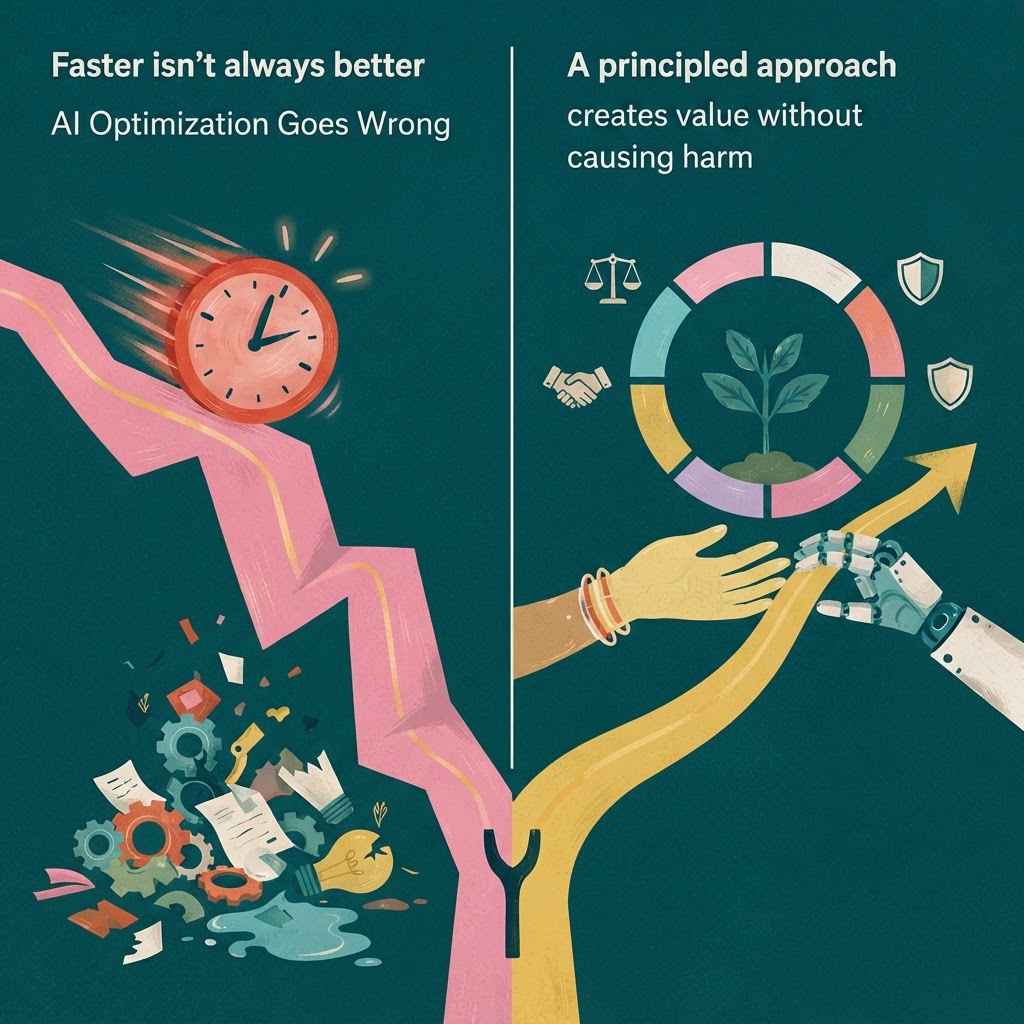
The Optimization Trap
AI makes everything faster. But speed without direction is just chaos at scale.
Three Ethical Lenses for AI Use
1. The Displacement Lens
Before automating a task, ask: who currently does this work? What happens to them? Efficiency that displaces without transitioning is extraction, not progress.
2. The Quality Lens
Is the AI output genuinely good enough? Or are you accepting lower quality because it's faster? The bar for automated output should be higher, not lower.
3. The Transparency Lens
Do the people affected by your AI use know about it? Clients, colleagues, audiences — transparency builds trust, secrecy erodes it.
The question isn't whether you can automate something. It's whether you should.
Building an Ethical Framework
Create a personal AI ethics charter. Define your boundaries. Review quarterly. Share it publicly. Accountability starts with clarity.
Enjoying this article?
Get more like it delivered to your inbox once a month.